13 Testable Video Hook Ideas to Hold Viewers Past 3 Seconds
The strongest short-form hooks combine a specific outcome or curiosity gap with visual motion and bold on-screen text, because over half of viewers watch with sound off. Reels that hold viewers past three seconds can pull 5 to 10 times more reach than ones that lose them early. Pick one template below, cut it into your next clip, and test it today.
TL;DR:
- Most effective hooks are short, visually dynamic, and combine a specific promise with on-screen text that can be read in one glance within 1.5 seconds.
- Testing multiple variations of the same hook on identical content helps identify which opening retains viewers best, often focusing on the three-second hold rate.
- Platform-specific timing adjustments are crucial: Reels require faster hooks at 1.0 to 1.5 seconds, TikTok around 1.5 seconds, and Shorts can stretch to two seconds.
- Using AI clipping tools can streamline creating and testing multiple hook variants by automatically highlighting engagement moments and formatting clips for different platforms.
- Consistently reviewing key metrics like three-second retention and engagement data guides continuous improvements and prevents reliance on patterns that may become boring over time.
Table of Contents
- Video Hook Ideas That Actually Retain Viewers
- The Anatomy of a Hook: Frame, Line, and Overlay
- How to Test and Scale Your Hooks
- Adapting One Hook for TikTok, Reels, and Shorts
- Hook Mistakes That Quietly Kill Reach
- How AI Clipping Speeds Up Hook Testing
- A Short Note on Testing With Humility
- Try Clipspeed to Batch-Test Your Next Hook
- Sources
- FAQ
Video Hook Ideas That Actually Retain Viewers
Formulas beat one-liners. Memorize the structure, not the phrasing, and you can generate fresh hooks for every video you post. Here are the templates worth building into your rotation, based on what consistently performs across 2026 short-form retention data.
- Specific outcome. Template: “I did [specific action] for [timeframe] and here’s what happened.” Example: “I posted daily for a month and my views grew dramatically.” Specific-outcome hooks land in the 38 to 45% retention band in recent analyses, the strongest of any formula tested. Add the number as bold overlay text.
- POV. Template: “POV: you just [relatable situation].” Example: “POV: your boss reads your Slack messages before you send them.” POV hooks average around 42% retention, largely because they put the viewer inside the scene instantly.
- Unpopular opinion. Template: “Unpopular opinion: [common belief] is wrong.” Example: “Unpopular opinion: cold plunges are mostly placebo.” This drives comments and shares more than watch time, so it’s worth pairing with a strong second half.
- Curiosity gap. Template: “The [industry] trick nobody tells you about.” Example: “The editing trick nobody tells you about that doubled my retention.” Overlay just the first half of the promise, then reveal the rest on screen a beat later.
- Direct callout. Template: “If you’re a [specific audience], watch this.” Example: “If you’re a freelance editor charging under $50 an hour, watch this.” This filters for relevance fast and tends to boost saves among the right audience.
- Numbered payoff. Template: “[Number] ways to [desired result].” Example: “5 hooks that stopped my scroll rate cold.” Numbers set a concrete expectation, which lifts completion rate because viewers want to see the list finish.
- Pattern interrupt. Template: Open mid-action or mid-sentence, no setup. Example: A jump cut straight to someone dropping a prop, then “Wait, that’s not supposed to happen.” This formula depends almost entirely on the first frame. The visual motion buys the fraction of a second your verbal line needs to land.
- Question hook. Template: “Why does [common thing] always [problem]?” Example: “Why does my phone battery die faster after every update?” Works well on watch time when the question genuinely lacks an obvious answer.
- Confession. Template: “I have to admit something about [topic].” Example: “I have to admit I faked my way through client calls for two years.” Builds trust fast and pushes comment counts.
- Fast fix. Template: “Fix [problem] in under [short time].” Example: “Fix a shaky voiceover in under 10 seconds.” Great for saves, since viewers bookmark it to try later.
- Diagnostic. Template: “You’re doing [common task] wrong if [condition].” Example: “You’re editing wrong if your first cut happens after 3 seconds.” Pairs naturally with a checklist body, which keeps completion high.
- Challenge. Template: “Try this before you post your next video.” Example: “Try this sound test before you post your next video.” Frames the video as an active task, not passive viewing.
- Visual pattern-break. Template: Show something visually unexpected with zero verbal setup for the first second. Example: Text on screen reading “wait for it” over a still frame that suddenly moves. This leans entirely on frame one, so it only works if the motion is sharp and immediate.
For every template, keep the overlay text short enough to read in one glance. If your spoken line takes 1.5 seconds to land, your text needs to say the same thing in three or four words, not a full sentence.
The Anatomy of a Hook: Frame, Line, and Overlay
A hook is three layers working together: the first frame, the first spoken line, and the text overlay. Top creators align all three instead of treating them as separate decisions, according to guides analyzing TikTok hook formulas.
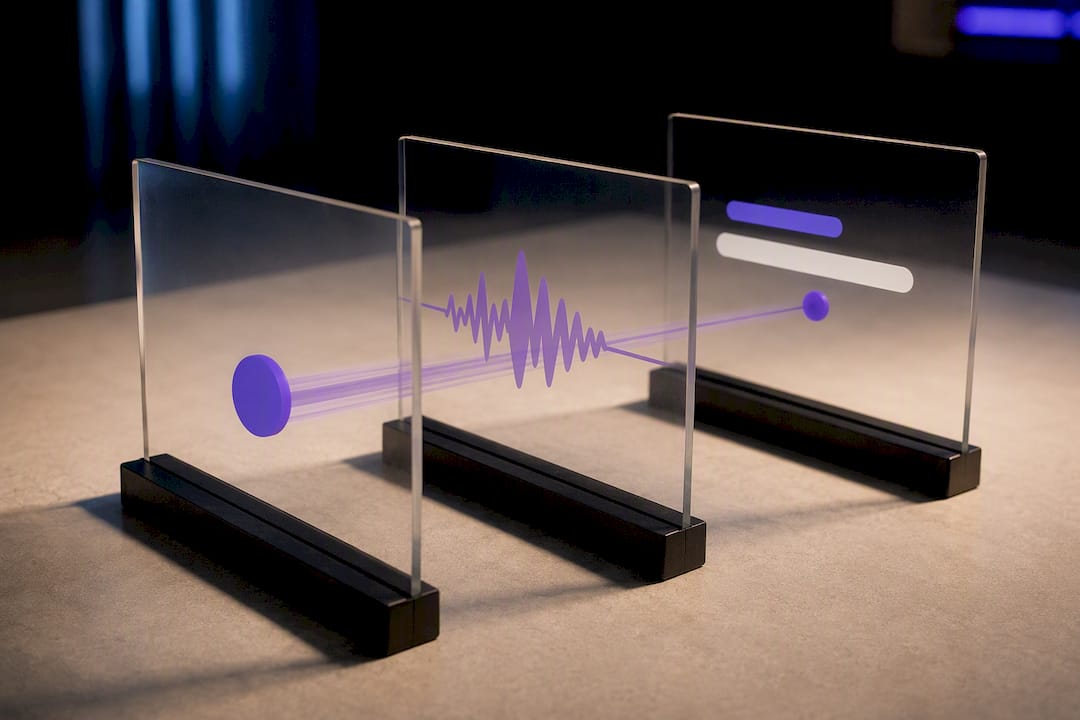
The first frame needs one focal point. A face, a product, or a single object in motion. Skip logos, skip slow fades, skip any static shot that gives the algorithm a reason to think nothing is happening. Motion in frame one is what buys you the next second of attention.
Your verbal line should land inside roughly 1 to 1.5 seconds. That means writing short. If your spoken hook takes three seconds to finish, you’ve already lost the viewers who decide in the first beat whether to keep watching. Your on-screen text overlay should mirror that line closely, because more than half of short-form viewers have their sound off and rely entirely on readable text in the first frame.
Pro Tip: Write your overlay text before you record. If you can’t compress your hook into five words on screen, your spoken line is probably too long too.
Run every clip through this checklist before you post:
- Does the hook land inside 1.5 seconds?
- Is the overlay text readable at a glance, with no sound needed?
- Is the promise specific, not vague?
- Does the body actually deliver on what the hook promised?
- Does the first frame include visible motion?
- Have you tested more than one opener for this idea?
The stakes are real: Reels holding 60% or more of viewers past three seconds see 5 to 10 times the reach of clips that drop under 40% retention in that window. That gap is almost entirely decided by whether these three layers work together.
How to Test and Scale Your Hooks
Guessing which hook works best wastes your best ideas. Testing tells you. Here’s the workflow worth running on every piece of content you produce.
- Generate 3 to 5 hook variants per idea. Keep the body of the video identical and only change the opener. Isolating the opener as the single variable is what makes the results trustworthy, since testing only the hook while holding the body constant removes every other explanation for a difference in performance.
- Post the variants and let them run 24 to 48 hours. That window is long enough for the platform’s distribution algorithm to show a real sample size without waiting so long that trending sounds or timing shift the results.
- Check four numbers: the 3-second hold rate, average watch time, completion rate, and saves or shares. A hook that holds under 40% at three seconds is a strong candidate to kill outright.
- Keep the winner, retire the rest. Don’t average results across variants. The best hook usually wins clearly on hold rate, and that’s the one you build your next batch around.
- Rotate formulas weekly. A useful cadence is two POV hooks, one specific-outcome hook, and one contrarian hook across a week of posting. Rotating formulas keeps your audience from tuning out a pattern and signals variety to the algorithm.
Pro Tip: Log your hook formula, hold rate, and completion rate in a simple spreadsheet after every post. Six weeks of that data will tell you more about your audience than any single “viral” hook ever will.
Adapting One Hook for TikTok, Reels, and Shorts
The same hook idea needs small timing and formatting adjustments depending on where you post it. Platform-specific tweaks help your hook actually feel native, according to Reel-specific hook guidance.
- Instagram Reels: Tighten your hook to land in 1.0 to 1.5 seconds. Reels audiences scroll fast, and overlay text should sit in the upper third of the frame so it clears the caption and like button area. Original voice tends to outperform trending audio when your hook depends on a specific claim.
- TikTok: Aim for closer to 1.5 seconds before the payoff starts. TikTok viewers tolerate a touch more setup, especially when a trending sound signals the format before your line even lands. Center your overlay text and keep it to one line.
- YouTube Shorts: You can stretch to roughly 2 seconds before the hook needs to resolve, since Shorts viewers arrive with slightly more patience. Overlay text can run a bit longer here, but keep captions burned in since autoplay often starts muted.
One-line example across all three: “I tested 5 hooks so you don’t have to” becomes a 1.2-second cold open on Reels, a 1.5-second line over a trending sound on TikTok, and a 2-second setup with burned-in captions on Shorts. Same idea, three different paces.
For creators repurposing long-form footage into these formats, the Instagram Reels export tool handles the aspect ratio and caption placement automatically, which saves the manual reformatting step most creators do by hand.
Hook Mistakes That Quietly Kill Reach
- Slow start. Any setup before the payoff loses viewers. Fix: cut the first two seconds entirely and see if the video still makes sense.
- Vague promise. “This will change how you think about X” tells the viewer nothing. Fix: replace it with a number or a named result.
- Hook-payoff mismatch. Promising a “secret” and delivering common advice tanks completion rate. Fix: make sure your body actually contains what the hook promised.
- Static first frame. No motion in frame one signals a slow video before anyone reads a word. Fix: start on movement, even something as small as a hand gesture.
- Over-reliance on trending sounds. A viral sound can’t save a weak hook, and copying one exact opener that worked once rarely repeats. Fix: rotate formulas and test new openers instead of chasing a single winning line.
How AI Clipping Speeds Up Hook Testing
Testing 3 to 5 hook variants per idea gets slow when you’re manually cutting each version. An AI clipping workflow shortens that cycle: upload long-form footage or a live stream, let the system auto-detect high-engagement moments, then batch-create multiple clips from the same footage with different hook overlays for testing.
An AI clipping platform maps directly onto that workflow with:
- Automatic captioning and speaker tracking, so each variant is ready to post without manual editing.
- Auto-scheduling across platforms, which lets you launch your 3 to 5 variants at once for a clean 24 to 48 hour test window.
- Multi-format output for TikTok, Reels, and Shorts from a single source clip.
- Multiple caption styles you can preview before choosing which one fits your hook’s tone.
Understanding how the detection technology finds high-engagement moments helps explain why the batch step works: the system is already flagging the moments most likely to hook viewers before you write a single overlay line.
A Short Note on Testing With Humility
The hook that wins this week won’t win forever. Audiences get bored of patterns, including good ones. Keep your payoff honest, rotate your formulas on a real cadence, and treat every “viral” opener as a hypothesis to retest, not a formula to repeat forever.
— kyle
Try Clipspeed to Batch-Test Your Next Hook
Manually cutting five hook variants from one long-form video eats an afternoon most creators don’t have. An AI platform is built for exactly that gap: it auto-detects the high-engagement moments in your footage, then lets you batch-generate multiple clips from the same source so you can test different openers without re-editing from scratch every time.
If you’re pulling clips from a podcast or livestream, the livestream clipping tool turns hours of footage into testable short-form clips automatically, complete with captions and speaker tracking already applied. Want to see how your hook text will actually look before you post it? Preview all 14+ caption styles on the caption style preview page and pick the one that reads clearly in the first frame. Start a trial and run your next batch of hook variants this week.
Sources
- How to Write Instagram Reel Hooks That Stop the Scroll (2026) · Creator Lane
- Instagram Reels Hook Generator — 2026 Templates | Instapdown
- How to Write TikTok Hooks: 15 Formulas (2026)
FAQ
What are some good video hook examples?
Strong examples include “I did this for 30 days and here’s what happened” (specific outcome), “POV: your boss reads your Slack messages” (POV), and “The editing trick nobody tells you about” (curiosity gap). Each pairs with bold on-screen text since most short-form viewers watch on mute.
What makes a hook catchy?
A catchy hook combines a specific, concrete promise with visual motion in the first frame and matching on-screen text, landing the full idea in under 1.5 seconds. Vague or generic openers rarely hold attention past the first second.
What are some good short-form video ideas?
Diagnostic content (“you’re doing X wrong if…”), fast fixes, and numbered lists tend to perform well because they set a clear expectation the body can deliver on. Testing 3 to 5 hook variants on the same idea, as described in the testing workflow above, reveals which angle actually resonates with your specific audience.
What is a good attention-grabbing hook?
The best-performing formulas in 2026 data are specific-outcome hooks, which land in the 38 to 45% retention band, and POV hooks, which average around 42%. Both work because they set a concrete, immediate expectation instead of a vague tease.
How do I know if my hook is actually working?
Track your 3-second hold rate first. Clips holding 60% or more of viewers past three seconds see 5 to 10 times more reach than those dropping under 40%, so that single number tells you more than views or likes.