One long video in, a week of posts out
Paste a link. Get the best moments.
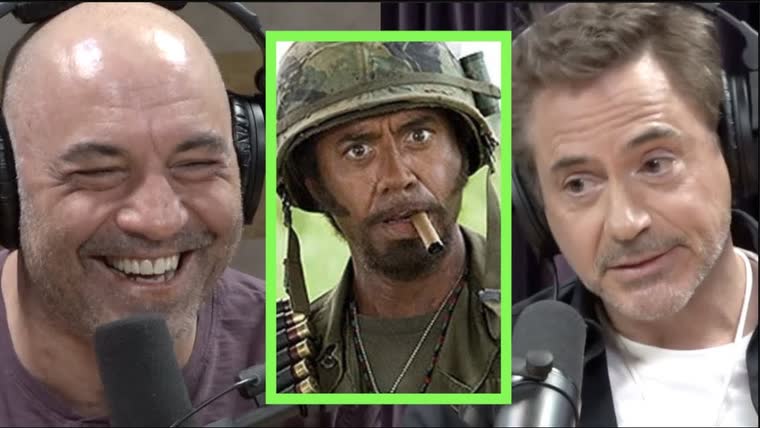
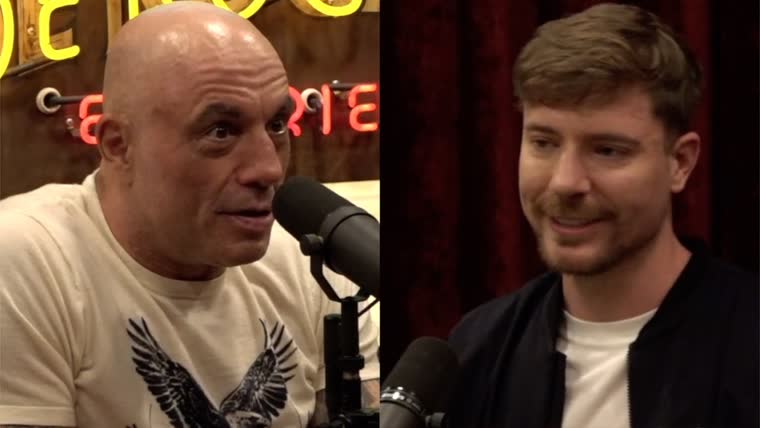
Real ClipSpeedAI output — every clip below was scored, cut, reframed to 9:16 and captioned automatically from the video above it.
How a client job runs
The pipeline is the same whether it is one podcast this week or forty sources across nine accounts.
1
Intake the source
Paste the client link if the episode or VOD is public, or upload the file they sent you. Nothing needs to be pre-trimmed, transcribed or marked up first, which removes the usual back-and-forth where you ask the client for timestamps and wait three days for a reply.
2
Let the pass run while your team does something else
The system reads the whole source, isolates the segments worth cutting, trims each to a complete thought, strips filler and dead air, reframes to vertical with the speaker tracked, burns in captions, and ranks the results. A two-hour source is handled per upload on every plan, the $1 trial included.
3
Review, adjust, deliver
Your editor opens a scored shortlist instead of a two-hour timeline. They kill anything off-brand, fix the openings that need a sentence trimmed, apply the client look, and either export or schedule the batch to the client accounts. The reviewing is the retained work; the searching was the overhead.
What changes at agency volume
Individually these are conveniences. Across nine clients and a monthly quota they are the difference between a profitable retainer and one you quietly want to end.
⏱
Turnaround measured in minutes
The client streams Tuesday night and wants clips before their audience has moved on. A pass finishes in minutes rather than sitting in an editor queue behind two other accounts, which means you can promise next-morning delivery and actually keep it during a busy week.
📦
Volume without proportional headcount
Adding a client normally means adding editor hours, and the hours scale linearly while your prices do not. Moving the search-and-render half of the job to software breaks that link. The tenth client costs you review time, not another hire.
📊
A ranking you can hand to the client
Every clip is graded 0-100 on how it opens and paces. Delivering a ranked set instead of an unsorted folder changes the conversation with a client who has opinions: you are proposing an order, with a reason attached, rather than asking them to sift.
🔴
Real-time clipping for streamer clients
If you serve streamers, the VOD is already late. Connecting a client's YouTube, Twitch or Kick channel produces clips during the broadcast, so the moment is deliverable while chat is still repeating it. Very few tools an agency can buy do this at all.
🎨
Clients do not have to look identical
Eleven caption styles, seven layouts and per-clip title control mean two accounts on your roster can have visibly different output. A shop where every client posts the same yellow bouncing caption is a shop clients eventually notice they are sharing.
🧼
Clean exports, so the deliverable is yours
Paid renders carry no ClipSpeedAI badge. What lands in the client folder looks like your studio made it, and you can push the client logo onto every clip through the Brand Kit rather than delivering something with a vendor mark in the corner.
🔌
An API for shops that have a pipeline
If you already run intake through Airtable, Notion or your own dashboard, the developer API takes a source and returns finished clips so the whole step disappears into your existing process. There is also an MCP connector, which is a genuinely fast way for an account manager to run a job by asking Claude. Details in the API docs.
📅
Posting to the client accounts directly
Connect the client's TikTok, Instagram and YouTube accounts and schedule the approved batch onto a calendar. Fewer handoffs means fewer of the failure modes that eat agency time — the wrong file sent, the post that never went up, the client who forgot to publish.
🗂
A searchable back catalogue per source
Everything processed stays in the library with scores and titles attached. When a client asks in March for the thing they said in November, you can find it, which is a small feature that saves an embarrassing hour surprisingly often.
Which shops this suits
🎮 Streamer clip agencies
Volume, speed and a client who broadcasts twelve hours a week. Live clipping is the reason this category tends to adopt fastest.
🎙 Podcast production studios
You already handle the edit and the show notes; short-form is the upsell most studios sell before they have solved delivering it. See the podcast clip generator for how a single episode gets mined.
📣 Social retainers with a clip quota
When the contract says a number of assets per month, the risk is the month where source footage arrives late and the quota does not move.
👔 Personal-brand shops
Founders and executives produce webinars and interviews and expect them turned into presence. The coaching clip generator covers that footage type in detail.
🎤 Event and conference video teams
Twenty sessions in two days is a mountain of footage with a short relevance window. Automated passes make same-week delivery realistic.
🧑💼 Talent managers
Managing several creators means several content calendars. Consolidating the clip step is usually the first real efficiency available.
Where the hours actually go on a clip retainer
Agencies quote clip work as if cutting is the job. Time an editor properly and the split is unflattering: a large share goes to watching source footage looking for candidates, a smaller share to the cuts themselves, and a stubborn remainder to captioning, reframing and exporting. Only one of those three is skilled work you can charge a premium for.
The searching is also the part that scales worst. A two-hour source takes two hours to review regardless of how good your editor is, and it takes that long every single week for every single client. You cannot train your way out of it and you cannot batch it. It is a fixed cost per source, which is exactly the shape of cost that destroys margin as you add accounts.
Automating that portion changes what an editor day contains. Instead of one person consuming eight hours of footage to produce twelve clips, they open scored shortlists from four sources, discard what does not fit each client, tighten what does, and spend their remaining attention on hooks and titles. Same headcount, several times the delivered volume, and better work because nobody is on hour six of watching a stream.
What still has to be a person
Client voice. A model can tell that a segment is self-contained and well-paced. It cannot know that this particular client never swears in public, is in the middle of a funding round, or had a falling-out with the person they are praising in minute forty. That context lives with your account manager and it is a large part of what the client is buying.
Risk. The account-ending mistake in this business is not a mediocre clip, it is a clip that takes something out of context and puts it in front of the wrong audience. Anything automated will happily produce that, because it has no concept of consequences. A human approval gate before delivery is not optional overhead — it is the service.
Judgement about the calendar. Which of thirty approved clips leads the week, what gets held for a launch, what never goes out at all. Score ranks clips against each other on craft; it knows nothing about the client campaign. Strategy is the thing you should be selling anyway, and this frees up the hours to actually do it.
The mistakes that end a clip retainer
Delivering unreviewed output. It is the obvious one and shops still do it in a busy week, because the clips look finished and the deadline is today. The client does not experience it as automation working — they experience it as you not watching what you sent, and that impression is very hard to reverse.
Making every account look the same. Two clients who follow each other on social will notice identical caption styling within a month. It costs a few minutes per account to differentiate, and skipping it is how a shop starts feeling like a template mill to the people paying for it.
Selling a clip count instead of an outcome. A contract that promises a number invites the client to count, and once volume is the metric you are optimising for the wrong thing. Selling a cadence and a standard, with volume as a consequence, keeps the conversation on quality.
Letting turnaround slip back to the old normal. If automation cuts your delivery time and nobody outside the studio knows, you have bought yourself slack rather than a competitive advantage. Repricing or repositioning around speed is the point of the efficiency.
Treating the shortlist as the deliverable. The ranked set is where your editor starts, not what the client receives. A shop that forwards raw output is reselling software access, and the client will eventually work that out and buy it directly.
A weekly production workflow for a full roster
Pick a fixed intake day and hold it. Sources arriving whenever a client remembers is the single largest source of chaos in a clip shop, and the fix is boring: a standing deadline, a shared place to drop links or files, and a policy that anything late rolls into next week. Automation makes the processing fast, but it cannot make a client send you the recording.
Batch the passes overnight or first thing. Because the machine time is not your time, running everything before the studio opens means your team walks into ranked shortlists instead of raw footage. That single change is what converts the efficiency into calmer days rather than more crowded ones.
Do review in one focused block per client, not scattered across the day. Reviewing requires holding a client voice in your head, and switching between three accounts every twenty minutes is how off-brand clips slip through. One account, one sitting, one approved batch.
Schedule immediately after approval, while the reasoning is fresh. Approved clips sitting in a folder waiting for someone to post them is where the week silently fails. Queue them, note anything held back for a launch, and close the client out for the week before opening the next one.
Keep a rejection log per client. Two lines each — what you killed and why. Within a month that log tells your team what a given client will not tolerate better than any brand document, and it is the asset that makes a new hire useful in days instead of weeks.
Troubleshooting the jobs that make a client email you
A long source came back with very few clips. Runtime is not the same thing as usable speech, and the gap is where this usually sits: applause, walk-on music, a panel talking over each other, a stretch where the mic was off. The engine only proposes segments it can read as complete spoken thoughts, so a ninety-minute recording with twenty minutes of clean talk behaves like a twenty-minute recording. Check the source before you go back to the client, because the honest answer is often that the footage was thin rather than that the pass failed.
The clips open cleanly but stop somewhere odd. Endings are the harder half of the boundary problem. When a speaker runs one continuous thought past the length a clip can hold, there is no sentence edge left inside the window to finish on, and the cut lands where the cap falls instead. Rambling sources and unpunctuated speech are where you see it. The fix is a manual out-point in review, and it is worth spending the thirty seconds on the two or three clips you are actually delivering.
The frame keeps favouring the wrong person. Face tracking anchors on the speaker it can see, so a two-hander where one person is far from camera, side-on, or lit from behind is the case it handles least well. Switching that clip to a split layout is usually faster than fighting the crop, and on a panel it is the better-looking answer anyway. If a whole client shoots that way, fix it at the camera and the problem stops recurring every week.
A recurring name is spelled wrong in every clip. That is transcription, not styling, and it will keep happening on the same word across the whole account because the model mishears it consistently. Log the words a given client cares about, check them during review, and where a mangled name sits in the first line of a clip, prefer a different clip over shipping it. It is the single most noticeable defect a client can find in a delivery.
When a client account is not the right fit for this
Accounts whose value sits in the picture rather than the talking. A product brand shooting films over a music bed, a dance studio, a motion-design roster — the selector reads what was said, so a source with almost no speech gives it nothing to rank and what comes back is arbitrary rather than chosen. Those clients still need somebody on a timeline, and quoting them a monthly clip number on the strength of what this does for a podcast account is how you end up delivering padding.
Accounts in a weaker language tier, at least until you have run one. Because both the selection and the cut points come off the transcript, a language the transcriber struggles with does not simply produce rougher captions — it produces clips that trail off instead of landing. That is a different kind of failure from a spelling error, and the place to discover it is a test source, not week three of a signed retainer.
Accounts where every second has to be cleared before it leaves the building. Regulated clients are not disqualified and plenty of financial and medical rosters work fine here, but if a compliance team checks each clip against approved wording, the hours you save are only the searching hours. The approval queue stays exactly as slow as it was, so price the retainer against that and not against processing time.
Accounts producing one short recording a month. What this removes scales with source length and roster size, and a single twenty-minute video is an afternoon a competent editor simply absorbs. The economics turn somewhere around the point where a person is watching several hours of footage a week purely to find candidates, which is also the point where the searching starts making your team worse at the deciding.
Accounts that bought motion design and assume they are buying it again. Animated lower thirds, cutaway footage, sound design, edits landing on a beat — none of that is in scope, and a clip retainer sold against a showreel full of it gets judged against the showreel. Show that client a genuine unretouched output before the contract rather than a portfolio piece your team hand-finished over two days.
Running several clients through one tool
Worth being straight about how this is organised. There is no white-labelled agency console with a client switcher and per-client seats — the dashboard is a ClipSpeedAI product and it looks like one. What is white-label is the output: paid renders come out clean, with your client's branding on them if you want it, so the deliverable never reveals the vendor.
In practice shops run it one of two ways. Smaller ones keep everything in a single account and work by source, which is fine when the roster is short and one person handles delivery. Once you are past a few clients, a separate account per client is the cleaner arrangement: libraries stay separate, connected social accounts cannot be crossed, and offboarding a client is a clean line rather than an archaeology exercise.
If neither model fits how your shop works, the API is the escape hatch and the reason it exists. Wire the engine into whatever intake and approval system you already run, keep your own client records as the source of truth, and treat clip production as a service call inside a pipeline you control. Pricing starts at a 3-day trial for $1 and then $39 a month for full access, which is a straightforward number to put against a retainer.
What running other people's footage through this has taught us
Observations from operating the pipeline in production — not general advice.
The language tiers are a selection problem before they are a captions problem
One transcript drives two separate jobs: which segments get chosen, and where each one is cut. In practice that is why a Spanish or Portuguese source behaves close to an English one while a tonal source or a heavy code-switcher does not, and why the symptom on a weak-tier client is rarely a garbled word on screen. It shows up as a shortlist of segments that open well and then stop somewhere that is not an ending, because the boundary logic could not find the shape of a sentence to finish on.
Client names are the words a speech model gets wrong most often
Ordinary conversational speech transcribes well; proper nouns do not. Product names, guest surnames and whatever acronyms an industry runs on are exactly the words a client clip exists to say, and they are the ones that come back mangled. Because the caption is rendered into the pixels, what you hand over is final — there is no separate text file the client can quietly correct at their end. The cheap guard is a reviewer reading the caption track on the clips you actually intend to send, which costs seconds each and prevents a misspelled surname sitting on a client feed.
The scheduler connects channels, not clients
Connected TikTok, Instagram and YouTube destinations hang off the login, and so does the clip library. There is no client record in the product to attach either of them to, which is why a shop running nine rosters from one account eventually picks a destination from a list where two entries look nearly identical. The resulting failure is not a weak clip, it is a good clip on the wrong feed, and an apology never fully removes it. A separate account per client converts that from something a tired person has to remember into something the structure will not let them do.
Compared with the other ways to hit volume
vs. hiring another editor
An editor brings taste, which software does not. They also bring a salary, a ramp-up period, holidays and the awkward month when a client pauses. The realistic version for most shops is fewer editors doing higher-value work rather than none, because the hours you remove are the ones nobody enjoyed anyway.
vs. an offshore editing team
Cheap per clip and genuinely effective for well-specified work. The friction is turnaround and briefing: a same-day stream moment does not survive a timezone gap, and explaining which forty seconds to use takes about as long as finding it yourself. Many shops keep the team and use automation to feed them shortlists.
vs. building your own pipeline
It is all available — transcription models, ffmpeg, a caption renderer. Assembling it is a weekend, and maintaining it is a permanent part-time job for someone who should be selling. The piece you cannot easily reproduce is the selection quality, which is where most homegrown pipelines quietly end up back at manual review.
vs. telling clients to use a clipping tool themselves
Some will, and that is fine. What they will not do is review sixty clips a month, hold a consistent look, keep a calendar filled, or notice that clip nineteen is a liability. Selling judgement and reliability is a more durable position than selling access to software, and it survives the client discovering the software.
vs. rival tools sold into agencies
The commodity parts are common. Two things bear on agency work specifically: clips can be produced from a client broadcast while it is still live, and the whole engine is callable from your own code so it can live inside your delivery process. Test both on a real client source before you commit a retainer to it — start with one.
Frequently asked questions
Can I use this commercially for client work?
Yes. Clips you produce are yours to deliver, invoice for and publish on behalf of clients. There is no additional licence needed for commercial output, and paid exports carry no badge, so what lands in a client folder does not advertise the tool you used.
Is there a white-label version of the dashboard?
No. The interface is ClipSpeedAI-branded and clients logging into it would see that. The output is a different story: paid renders are clean and you can apply the client logo through the Brand Kit, so deliverables are effectively white-label even though the workspace is not.
How should I organise multiple clients?
Small rosters usually run inside one account and work source by source. Past a handful of clients, a separate account per client keeps libraries and connected social accounts cleanly separated and makes offboarding trivial. If you need a different structure than either, the API lets you keep client records in your own system.
Can my whole team use it?
Access follows the account. Most shops give the person handling production the credentials for whichever client account they are working in, which also keeps a natural boundary between clients. For a larger operation the practical path is running production through the API from a system you already control access in.
How fast is a single job?
Typically a few minutes, scaling with source length and queue depth. That figure is what makes overnight and same-day promises realistic — the bottleneck moves from processing to how quickly a human can review, which is a bottleneck you can actually staff against.
What is the pricing for agency use?
Full access starts with a 3-day trial for $1 and then runs $39 a month, cancellable in one click. Against a typical clip retainer that is a rounding error, which is the point — the meaningful cost in this business is human hours, not software.
Can I process a whole back catalogue at once?
Sources are processed individually rather than as a bulk folder drop in the dashboard. For a genuine back-catalogue migration the API is the right route: iterate the client's list of URLs from your own script and collect the finished clips as they complete.
Do you have an API?
Yes, the same engine behind the dashboard is exposed for direct calls, and there is an MCP connector so an account manager can run jobs conversationally through Claude. Both are documented in the
developer docs, including authentication and the shape of the responses.
Can I clip a client live stream in real time?
Yes. Connect their YouTube, Twitch or Kick channel and clips are produced while the broadcast runs. For any shop serving streamers this is usually the deciding feature, because the competitive difference is delivering a moment the same evening rather than the next afternoon.
Will every client output look the same?
Only if you let it. Caption style, layout, title and branding are all controllable per clip and per batch, and there are eleven caption styles and seven layouts to draw on. Deliberately differentiating your accounts is worth the few extra minutes it costs.
How does the output compare with an editor cutting the same source by hand?
On selection and on the mechanical work, close enough that a client will not tell them apart, and much faster. On judgement it is not close: an editor knows the account, hears the tone of a remark, and will refuse to cut something a model happily proposes. The realistic comparison is not one against the other but a machine pass feeding a human review, which is faster than manual and safer than automated delivery.
How much editor time does this actually save?
The honest framing is that it removes a category of work rather than a percentage. Reviewing source footage to find candidates and rendering finished verticals both go away; deciding, tightening and writing hooks do not. On a two-hour source that usually converts most of a day into a focused hour.
Do I still need to review every clip?
Yes, and any agency that stops doing this will eventually ship something that costs them a client. Automation has no idea what is sensitive, what is out of date, or what a client said in confidence on a stream. The approval gate is the service you are charging for.
What if a client hates the clips?
Treat the first batch as a calibration round. Ask which three they would have chosen and which three they would never post, then use that to shape what you approve going forward. Because you are reviewing a ranked shortlist rather than defending your own edit, that conversation is cheap to have.
Can I schedule posts to client social accounts?
Yes. Connect the client's TikTok, Instagram and YouTube accounts and queue the approved batch. Doing publishing in-house removes the most common delivery failure in this business, which is a perfectly good clip sitting unposted in a shared drive.
How long can client source videos be?
Each upload can run to two hours on every plan, the $1 trial included, with a two-minute floor at the other end. For longer material — an all-day event, a marathon stream — split the recording or connect the channel and let live clipping run during the broadcast.
Can I try it on a real client video first?
Yes, and you should. A dollar opens the three-day trial and it takes sources up to two hours, so run a piece of footage from your hardest client — the one whose taste you find least predictable — and see whether the shortlist matches what your editor would have picked.
Does it handle podcast, webinar and gaming footage differently?
The layout is chosen from what is on screen, so a two-person interview, a slide presentation and gameplay with a webcam each get an appropriate treatment rather than one forced crop. That matters for a mixed roster where consecutive jobs look nothing alike.
What about clients in other languages?
It goes in tiers, and you can plan a roster around them. English is the strongest by a clear margin. Spanish, Portuguese, French, German and Italian are solid enough to sign a retainer on. Tonal languages — Mandarin, Cantonese, Vietnamese, Thai — are weaker, as is a speaker who switches languages mid-sentence, which is the normal register in Hinglish and Taglish markets. Selection and cut placement both come off the transcript, so the tier sets a ceiling before anyone's taste is involved. Put one real source from that client through the $1 trial before you quote the work.
Can I resell clips as a productised service?
Yes, the output is yours to package however you want, whether that is a monthly retainer, a per-clip rate or a one-off back-catalogue project. What you are selling is judgement, consistency and turnaround, and the software is an input cost inside that.
Does it produce AI-generated video or voiceover?
No. There is no synthetic footage, no generated narration and no text-to-video anywhere in the product. Everything comes from the client's own recording, which is a useful thing to be able to tell a client who is nervous about AI in their content.
What happens to client footage after processing?
It is processed to produce the clips and is not published by us. If you handle footage under a client agreement, review the
privacy policy and make sure the terms you have signed permit third-party processing before you upload anything sensitive.
Can I edit clips before delivering them?
Yes. In and out points, caption style, titles and layout are all adjustable with a re-render, which is where most of the remaining editor time goes and where the difference between adequate and good is made.
Is the 0-100 score useful for client reporting?
As an internal sorting tool, yes. Putting it in a client report is riskier, because a score is not a performance prediction and a client who sees a 92 will hold you to it. Use it to decide what to lead with and report on what actually happened instead.
What if my client wants clips from a private video?
A link only works for publicly reachable video, so private, unlisted and members-only content has to be uploaded as a file. Everything downstream is identical either way. There is a fuller explanation on the
shorts from URL page.
Does it remove filler and dead air automatically?
On every clip. Ums, false starts and silences are cut, which is a task nobody on an editing team enjoys doing thirty times a month and one that has an outsized effect on how professional a short clip feels.
Can I cancel if a client contract ends?
Yes, in one click from the account, and we email before the trial converts. If you run an account per client, ending the account when the contract ends keeps your software costs tracking your roster instead of drifting above it.
Run your hardest client through it first
Not the easy account. Use the one with the two-hour sources and the picky feedback, and see what the shortlist looks like.
⚡ Run A Client Video — $1 trial
3-day trial · just $1 · cancel anytime