One long video in, a week of posts out
Paste a link. Get the best moments.
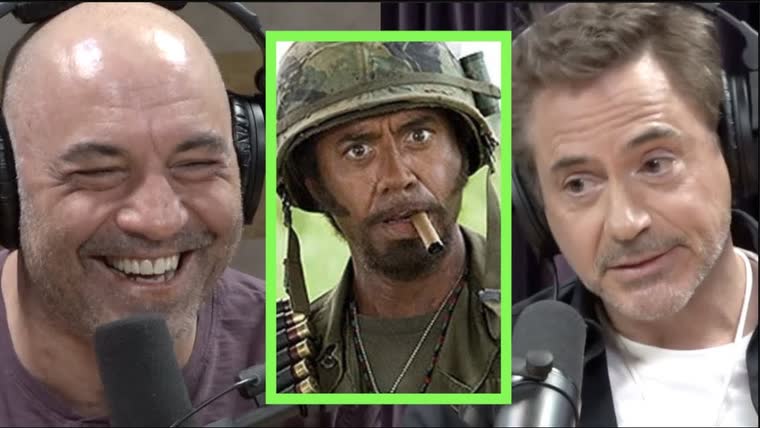
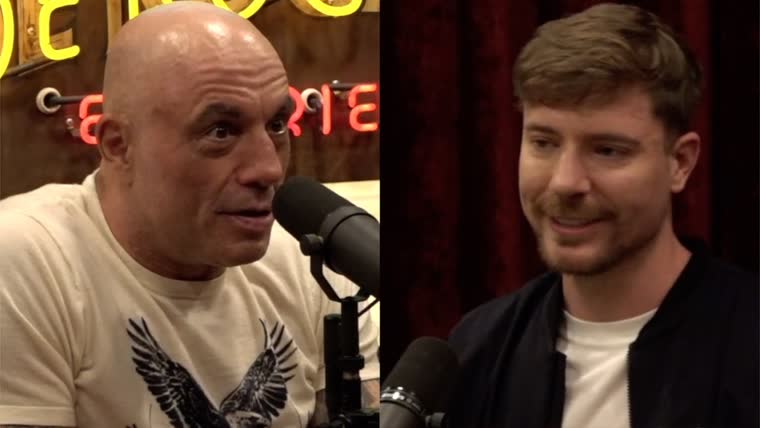
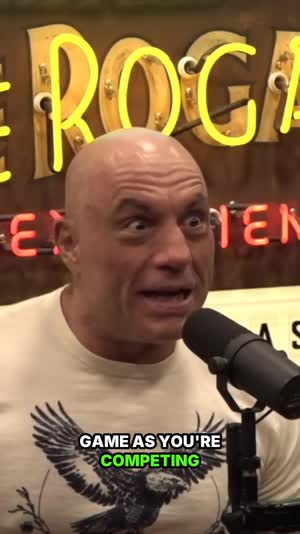
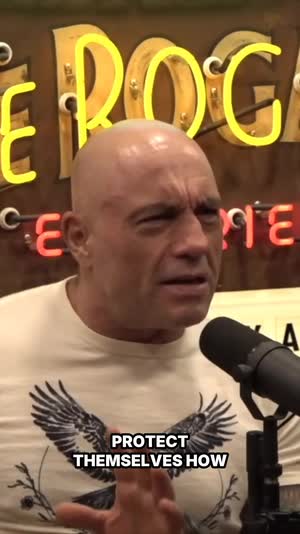
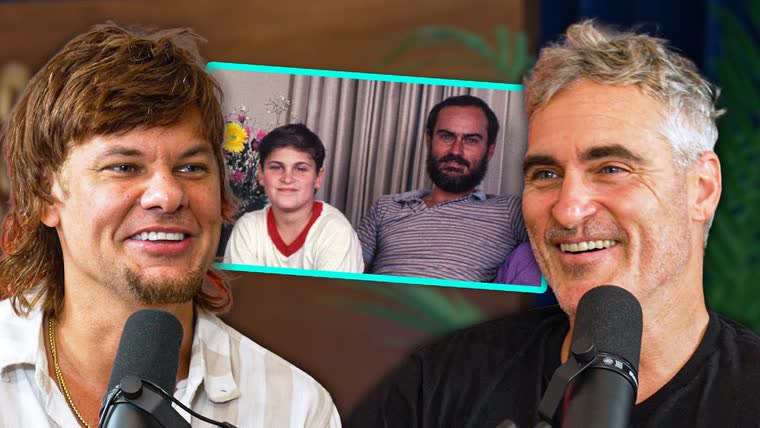
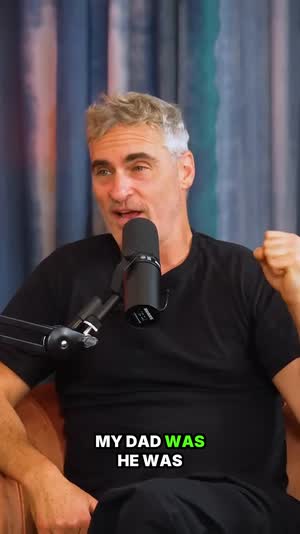
Real ClipSpeedAI output — every clip below was scored, cut, reframed to 9:16 and captioned automatically from the video above it.
How to remove silence from a video
You do not set a threshold, draw a range, or run a detect pass. You paste a link.
1
Point it at the recording
A YouTube URL works, and so does a direct upload if the footage was never published — screen captures, Zoom exports, raw webinar recordings. Two hours of source per file on every plan, the $1 trial included. Nothing gets installed and there is no session to configure first.
2
Gaps are measured against the speech, not a fixed volume floor
A room with an air conditioner never hits digital silence, and a whisper can fall below the level where a simple gate would call it empty. Quiet stretches here are identified relative to the actual speech in your recording, then cross-checked against the transcript so a long word is never mistaken for a pause.
3
Take the clips that already have rhythm
Each clip comes back vertical, paced, captioned, and graded 0-100. Where the gaps went is usually obvious the first time you watch: the same explanation now lands ten seconds earlier. If a pause you wanted got squeezed, widen the clip range and render it again.
How the dead air is handled
Removing silence is trivial. Removing the right silence, by the right amount, is the whole job.
⏱
Gaps between sentences collapsed, not erased
The space between two sentences carries meaning — it tells a listener one idea has finished. Rather than deleting it outright, long gaps are shortened to a length that still reads as a break. Erasing them entirely is what makes over-processed video sound like it is being shouted at you.
🎬
Every clip opens on the first word
Automated cuts habitually begin with half a second of nothing while the speaker inhales. On a feed that half second is the whole first impression. Clip boundaries are pulled tight to the speech at both ends, so the opening frame already has someone talking in it.
🤔
The long think before an answer
Interviews and Q&A produce the worst offenders: a good question, then eight seconds of somebody genuinely considering it. Kept whole, that gap alone will kill a forty-second clip. Trimmed down to a beat, it still reads as thoughtfulness rather than as a technical fault.
🖥
Screen recordings and the fumble time
Tutorials are full of narration-free stretches while you hunt for a menu or wait on a page load. These are the single biggest source of dead runtime in software demos. They are cut down, and the screenshare layout keeps what is on your display readable in a vertical frame while it happens.
🔊
Room tone kept instead of hard digital silence
Splicing out a gap and butting two takes together produces an audible drop in the noise floor — the ear catches it instantly even when nobody can say what changed. Transitions are handled so the background stays continuous across a removal.
🎭
Beats that are supposed to be there
A pause before a punchline is the joke. The silence after a hard number is what makes it land. These are pacing, not dead air, and cutting them is the most common way an automatic tool ruins a good moment. Comic and emphatic beats are left alone.
🔤
Captions written against the final timing
Once you shorten audio, any caption track built beforehand is wrong from the first removal onward and gets worse with every one after it. Word-by-word captions here are generated after the tightening, so the highlighted word always sits on the syllable being spoken.
📊
The score reflects the paced version
Every clip is graded 0-100 on how it opens and how it paces, and that grade is calculated on the tightened cut. A moment buried behind a slow lead-in often moves up the ranking substantially once the lead-in is gone, which changes what you post first.
🔴
Live streams, where the gaps are worst
Nobody fills three hours of broadcast without silence — reading chat, waiting on a load screen, thinking on air. Connect YouTube, Twitch or Kick and clips are cut mid-stream with the empty stretches already taken out.
📐
Vertical framing, layouts and scheduling included
The tightened clip is also reframed to 9:16 with face tracking, given a layout that suits the footage, branded from your Brand Kit, and queued to TikTok, Reels and Shorts if you want it there. Pacing is one stage of a finished post rather than a separate export.
Where dead air does the most damage
🖱 Tutorial and software creators
Half of a screen recording is often loading bars and menu hunting. Cutting that is the difference between a demo that feels crisp and one that feels like watching somebody use a computer.
🎓 Lecturers and educators
Classroom pacing and feed pacing are different animals. A lecture that works live at its natural speed needs compressing before any of it survives on a phone.
🎤 Interviewers and journalists
You cannot direct a guest to answer faster, and you should not want to. Trimming their thinking time afterwards keeps the answer and drops the wait.
🎮 Streamers
Queue times, loading screens and reading donations all count as runtime. Clipping live and tightening automatically keeps a moment postable while it is still current.
📊 Webinar and B2B marketers
A sixty-minute webinar contains maybe eight minutes of genuinely quotable material. Pacing decides whether those eight minutes work as clips or read as excerpts.
✂️ Editors and agencies
Tightening is the least creative hour of any edit and the easiest to hand off. Use the automatic pass as a base and spend your time on the parts a client would notice.
Where a retention graph actually drops
If you have ever looked at the retention curve on a short clip, the fall is almost never gradual. It is a cliff, and the cliff usually sits exactly where nothing was happening. Two seconds of silence in the middle of a vertical clip is an invitation to swipe, because the viewer has been handed a moment with no reason to stay.
The opening is worse still. A clip that begins with a breath, a chair creak and a half-second of nothing has used its whole first impression on the sound of a room. Whatever brilliant thing follows arrives after the decision has already been made.
None of this is about attention spans getting shorter. It is about competition. On a feed the alternative to your clip is one thumb movement away, which means the tolerance for waiting is effectively zero. In a cinema the same pause would be tension. Here it is a gap in service.
Silence is not one thing
A recording contains at least five distinguishable kinds of quiet, and treating them identically is why threshold-based tools produce strange results. There is the micro-gap between words, which must never be touched. There is the sentence break, which needs to survive but can shorten. There is the hesitation pause, which is dead weight. There is the operational gap — waiting for a slide, a page, a guest to unmute — which is pure waste. And there is the dramatic beat, which is content.
A volume gate cannot tell these apart because they all look the same on a meter. It only sees amplitude below a number for longer than a duration. That is why the classic result of running one is a video that has been shortened and also somehow ruined: the beats went, the fumbles stayed, and the whole thing now sounds slightly panicked.
Distinguishing them needs the transcript alongside the audio. Knowing that the quiet stretch sits between a question and an answer, or immediately after a punchline, or in the middle of somebody reading a list, tells you what kind of quiet it is. That context is what decides whether a gap is shortened, removed, or protected.
A practical workflow for pacing a whole batch
Work from your slowest source first. Counterintuitive, but a recording that already moves quickly gives you almost no signal about what the tightening is doing — everything comes back looking similar. A meandering one shows you the mechanism in a single clip.
Watch the top-scoring clip end to end before touching anything else, and watch it at normal speed rather than scrubbing. Scrubbing hides pacing entirely, which is the one property you are trying to evaluate. If a clip holds you for its full length without you reaching for the bar, the pass has done its job.
For the rest of the batch, judge on the first three seconds and the middle. Openings expose a clip that still starts on air rather than on a word, and the middle is where an unremoved gap will lose the viewer. The final seconds matter far less because anyone still watching at that point has already committed.
Where a beat got squeezed, extend the clip range rather than hunting for a setting. Widening the boundaries and re-rendering restores the surrounding context, and it is the only lever that exists for this — there is no threshold to nudge.
Keep a note of which sources need the most correction. If your Tuesday interview show consistently produces clips that feel over-tightened while your solo recordings are fine, that is a signal about how you record rather than about the tool, and it is usually fixable at the microphone.
Troubleshooting a tightened clip that came back wrong
Nearly every complaint about an automatic pacing pass turns out to be one of four symptoms, and three of them are fixed by moving a boundary rather than by hunting for a control that does not exist. Diagnosing them takes one listen on headphones, at normal speed, without the transcript open in another tab.
The clip still opens on air. That is a boundary symptom rather than a gap symptom: the cut landed correctly at the start of a sentence and the speaker took a breath before the first word of it. Nudge the in point forward by half a second and render again. It is easy to miss on laptop speakers and unmistakable on headphones, and it is the most expensive of the four because the wasted moment is the one deciding whether anyone stays.
A beat you wanted is gone. There is no threshold to soften, so the lever is the clip range: widen it and re-render. A longer window hands the pass more surrounding speech to judge each quiet stretch against, and a pause that looked like stalling inside a tight twenty seconds often reads correctly as emphasis once the sentences on either side of it are present.
Hardly anything was removed. Two causes account for most of this. Either the speaker was reading from a script, in which case there genuinely was not much dead air to find, or something is running underneath the speech — a music bed, a busy room, a fan close to the microphone — and a stretch with sound in it is not a quiet stretch. Take a case like a conference talk recorded with a PA hum under every sentence: the pass will be conservative there, and that is the correct behaviour rather than a fault.
The picture jumps where the audio was joined. That one is working as designed, since each removal cuts the video at the same instant. On a tight face-tracked vertical crop it reads as ordinary short-form editing. On a locked-off wide shot of a stage it reads as a fault, which is one more argument for a closer camera when you know a recording is going to be clipped.
Automatic tightening versus cutting the gaps by hand
The interesting comparison is not speed. Everybody already accepts that a machine razors gaps faster than a person does. The comparison worth having is consistency: a human makes excellent pacing decisions for the first ten minutes of an edit and quietly worse ones after that, and the decline is invisible from inside it. An automatic pass is no better than an attentive editor at minute one and considerably better at minute forty, because it does not get bored.
What a person still does better is read intent. A speaker who holds two full seconds before naming a figure is doing something deliberate, and a listener who was in the room knows that instantly. Context from the transcript catches most of these — a beat after a punchline, a pause before an answer — but the unusual ones, the pause that means somebody decided not to say something, are a human call and probably always will be.
In practice the split is by stakes, not by preference. Say you pull fifteen clips out of a webinar and one of them is going behind paid distribution while the other fourteen go out organically. Let the pass handle the fourteen, then take the one into a timeline and cut it by ear. The biggest mistake is treating the two approaches as rivals and picking a side, when the actual gain is spending your ear where it changes an outcome.
There is also a middle path most people miss. Run the pass first, watch the result, and use what it removed as a map of where your own recording drags. Two or three batches in you will start hearing your own habits — the tab-hunting, the throat-clearing before every answer — and fixing those at the microphone is worth more than any amount of post-processing.
Alternatives, and the jobs this is not the right shape for
Most creators who search for a silence remover want one of three different things, and only one of them is what this page describes. Being clear about which one you are is faster than a trial.
If you want your full-length recording republished with the gaps taken out, use a transcript-based editor. Those tools show you the words, let you delete a passage of text and cut the corresponding video, and they return a whole timeline rather than clips. That is a real workflow and it is not this one.
If the deliverable is audio only — a podcast episode, an audiobook chapter — the right tool is a DAW with a strip-silence function. It works on a waveform, it is deterministic, and for a single continuous programme with no vertical output it beats anything clip-oriented.
If you need frame-level control over one specific edit, use a timeline. A hero clip for a launch, a sizzle reel, anything where an individual join will be watched twenty times by people looking for flaws: cut it yourself. Automatic pacing is a throughput tool and throughput is not what that job needs.
And if the thing bothering you is the ums rather than the gaps, that is a related but separate pass, described properly on the filler word remover page. If instead the clips feel slow because the wrong forty seconds got selected in the first place, no amount of tightening helps and the best moments finder is the page that addresses it.
What this will not do, and where people go wrong with it
It will not hand you back a de-silenced copy of your original recording. ClipSpeedAI produces short vertical clips from long footage, and the tightening applies to those clips. If you want your full ninety-minute upload republished with the gaps removed, a timeline editor or a transcript editor is the honest recommendation and we would rather say so here than after you have paid.
There is also no threshold dial. You cannot set a minimum gap length in milliseconds or tell it to leave anything under 400ms alone, because the decision is made per gap from context rather than from one global number. If frame-level control over every individual pause is what you are shopping for, that is a manual edit and it always will be.
And pacing cannot save a clip that has nothing in it. Removing dead air from a slow answer produces a shorter slow answer. The 0-100 score exists for exactly that reason — tightening improves how a moment plays, and the grade tells you whether the moment was worth playing.
What we have learned running this engine
Observations from operating the pipeline in production — not general advice.
Caption timings are produced after the tightening, and that order cannot be reversed
Every removal pulls everything after it earlier, so a caption track built before the pass is wrong from the first gap onward and the error accumulates rather than staying constant. Ten removals of half a second each leaves the final words of a forty-second clip five seconds ahead of the voice, which is why this failure gets reported as bad transcription instead of as an ordering problem — the words are correct, they simply arrive early. Timing the words against the finished cut costs an extra step in the pipeline and removes an entire class of complaint.
Moving where the cut lands beat removing what was inside it
We sampled clip boundaries and listened to them rather than trusting the logs, and 71 per cent were audibly wrong — opening mid-thought, or ending on a clause left hanging. Cutting along sentence and thought boundaries instead took the same measurement to 17 per cent. The part worth repeating is that the better path already existed and was switched off, so the fix was configuration rather than engineering. Tightening the middle of a clip is worth far less than getting its two edges right, which is the reverse of where most attention goes.
A slow lead-in hides a moment from the ranking, not only from the viewer
The 0-100 grade is calculated on the tightened cut rather than on the raw selection, and that ordering has a consequence people find surprising the first time they see it. A genuinely strong answer sitting behind eight seconds of throat-clearing scores like a weak clip, because how a clip opens is a large part of how it is graded. Remove the lead-in and the same moment can climb several places in a batch, which changes what you post first and occasionally changes whether you post it at all.
Compared with the alternatives
vs. a silence-detection tool in a video editor
Premiere, Resolve and Audition all ship some form of detect-silence, and they work off a decibel threshold plus a minimum duration. On clean studio audio that is usable. On a real room it produces hundreds of markers you then have to review one by one, which is not obviously faster than cutting by ear.
vs. razoring the gaps yourself
By hand you get perfect judgement and terrible throughput. A ten-minute source with sixty gaps is an hour of unglamorous work before any creative decision has been made. Most people do it for the first two clips of a batch and then stop caring, which is exactly where quality becomes inconsistent.
vs. just speeding the whole video up
Bumping playback to 1.2x is the cheap version and it is genuinely tempting. The problem is that it compresses the good parts equally, so delivery starts to sound rushed while the empty stretches merely become slightly shorter empty stretches. Removing the gaps keeps the speech at the speed the person actually chose.
vs. other AI clippers that trim automatically
Trimming is common now, so compare on the specifics: are the deliberate beats surviving, do clips start on a word, does the noise floor jump at every splice. Those three are audible within one clip. Put a real recording through the trial and listen for them rather than reading a feature list.
Frequently asked questions
How do I remove silence from a video automatically?
Paste the URL at the top of this page or upload your file. Quiet stretches are located relative to the speech level in your own recording, classified using the transcript, and then shortened or removed as the clips are built. You never set a threshold or review a list of detected markers.
Does it remove every pause?
No, and that is deliberate. Micro-gaps between words are untouched, sentence breaks are shortened but kept, and dramatic beats are protected. What gets removed is the operational dead air — the waiting, the fumbling, the stalling before someone commits to an answer.
Will it de-silence my full-length video?
No. The output is short vertical clips cut from your source, with the tightening applied to those. There is no export that gives you the original runtime back with gaps removed. For that job you want a timeline or transcript editor, and it is a genuinely different product.
What does it cost to try?
Access begins with a three-day trial billed at $1, and it takes source video up to two hours, so you can hear the pacing change on footage you already know drags. After the trial Pro is $39 monthly. One click cancels, and a reminder email goes out before the trial converts.
How is this different from a decibel threshold?
A threshold only knows amplitude. It cannot tell the pause before a punchline from twelve seconds of hunting for a browser tab, so it treats both identically. Here the transcript supplies context about what surrounds each quiet stretch, which is what allows different gaps to be treated differently.
Will there be an audible jump where a gap was cut?
That happens when two pieces of audio with different background noise are butted together and the noise floor drops out. Transitions are handled so the room tone stays continuous across a removal. It is worth listening for on your first clip from the trial, because it is the flaw that most reliably exposes automated tightening.
Does it also cut ums and false starts?
Yes, in the same pass, because hesitation sounds and the silence around them are one problem rather than two. There is a fuller treatment of the verbal side on the
filler word remover page.
Can I set a minimum gap length?
There is no numeric control. Each gap is judged from what surrounds it rather than measured against a single global setting, which is how beats survive while fumbles do not. If you need millisecond control over individual pauses, that is a manual edit in a timeline.
Does removing silence make the speaker sound rushed?
It can if a tool strips everything, which is why sentence breaks are shortened rather than deleted here. The target is the pace of a well-edited clip, not the pace of an auctioneer. Delivery speed itself is never altered — no part of the audio is sped up.
How much shorter does a clip usually get?
On conversational and tutorial footage, somewhere between fifteen and thirty percent of a raw selection is commonly empty. Tightly produced material with a scripted read yields far less. The most reliable predictor is whether the speaker was working from notes.
Does the video jump when audio is removed?
Yes, the picture is cut at the same point, so each removal is a jump cut. On a tight face-tracked vertical crop that reads as standard short-form editing, which is what viewers already expect from the format. On a wide locked-off shot the cuts are more noticeable.
Do the captions stay aligned?
They do, because caption timings are produced after the tightening rather than before it. If text were generated first, every word following the first removal would sit early, and the error would accumulate across the clip until the highlight was a sentence ahead of the voice.
Is a screen recording a good candidate for this?
Screen recordings are one of the best cases for it, since loading time and menu navigation generate long narration-free stretches. The screenshare layout keeps your display legible in a vertical frame while those stretches are removed.
What about music or background audio during a pause?
A stretch with music under it is not silence and is not treated as one, because quiet is measured against the speech in your recording rather than against absolute zero. Beds and stings survive.
Do I have to upload, or will a YouTube link do?
Yes, and it is the faster path since nothing has to transfer from your machine. Uploading is there for recordings that never went public, which for this use case is most of them.
How long a recording can I send through the tightening?
Uploads accept up to two hours in a single file, on the $1 trial and on every plan after it. Longer sources can be split, or you can connect a channel and clip the stream live instead.
Do the exported clips have a watermark?
No. Everything you export renders clean, from the $1 trial onwards, and if you would rather have your own mark in the corner, the Brand Kit applies your logo across every clip consistently.
Does this work on a live stream?
It does, and live is where dead air accumulates fastest. Connect YouTube, Twitch or Kick and clips are produced during the broadcast with the gaps already tightened, so a moment is postable before the stream has ended.
Does gap detection work outside English?
Transcription covers major languages, with English the most reliable. Because gap classification leans on the transcript, quality tracks transcription quality. Test one recording in your language on the trial instead of taking a general claim on trust.
Can I adjust the result?
Yes. Clip start and end points, caption style, layout and title can all be changed and re-rendered. Widening the range is the usual fix when a tightening pass squeezed a beat you wanted to keep.
How long before the tightened clips come back?
Generally a few minutes, moving with source length and how busy the queue happens to be. Watching the progress bar is optional — the finished clips sit in your library until you come back for them.
Can I get silence removal through an API?
Yes. The same engine is available over a developer API, and there is an MCP connector so Claude can submit a video and return finished clips inside a chat. Both are documented under
developers.
Does it work for interviews with several people?
Yes, and multi-person recordings tend to have the longest gaps because of turn-taking. Framing for those clips is described on the
multi-speaker split screen page.
Is my footage kept private?
Your material is processed to make your clips and is never published by us anywhere. What comes out is yours to use. The
privacy policy sets out how the data is handled and retained.
What happens if I want out after the three days?
A single click in your account stops it, and your access carries on until the paid period expires. An email arrives ahead of the conversion date, so nothing is ever billed quietly in the background.
What if I actually like my pauses?
Some formats live on them — meditation content, dramatic readings, deliberately slow interviews. If that is your work, an automatic tightening pass is fighting your style and this is not the right tool. Running one video through the $1 trial will tell you in a couple of minutes.
Watch a slow recording turn tight
Choose something you already know drags in the middle. The gaps are the first thing you will notice missing, and the pacing is the thing that keeps people watching.
⚡ Tighten My Clips — $1 trial
3-day trial · just $1 · cancel anytime