Paste a broadcast link, upload a recording, or connect a live channel and get clips during the stream itself. The AI marks the quotable passages, cuts each on a full sentence so nothing is truncated into something the speaker did not say, burns in captions, and grades every clip 0-100. No footage is generated. Every frame came from the source.
🎬 Enter any URL under 2 hours
⏱ That video is longer than we can process
Clips a live broadcast as it airs
Cuts on whole sentences — no truncated quotes
Captions burned in for silent feeds
Split-screen keeps a panel legible
Nothing is generated or synthesised
One long video in, a week of posts out
Paste a link. Get the best moments.
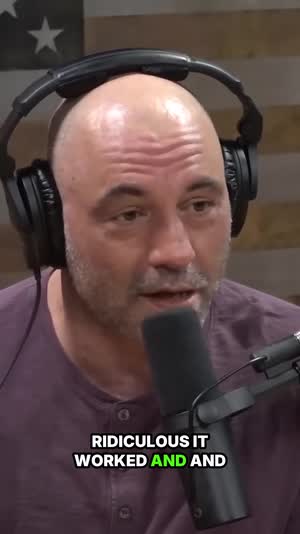
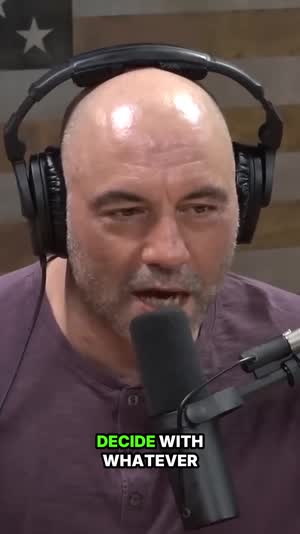
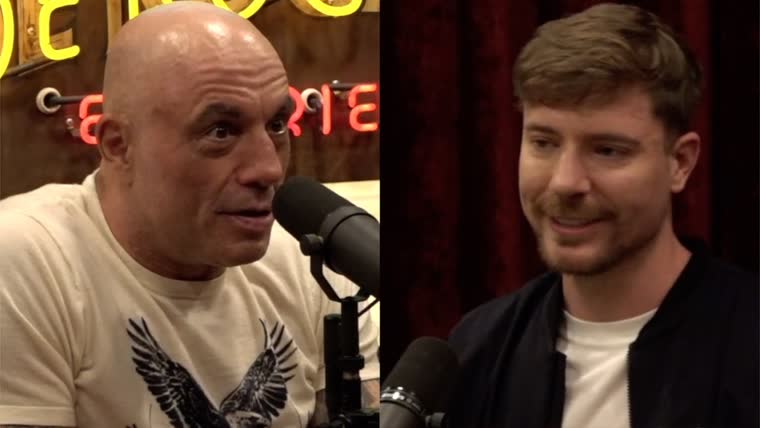
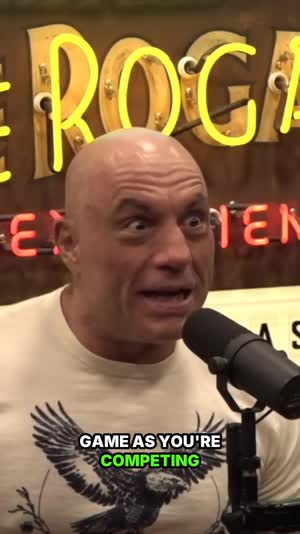
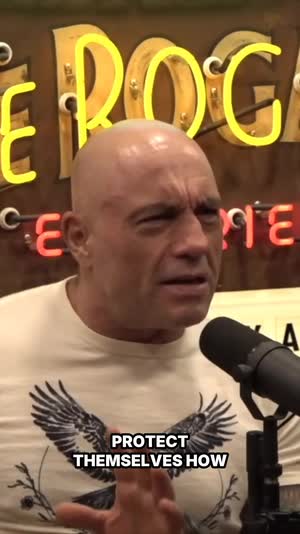
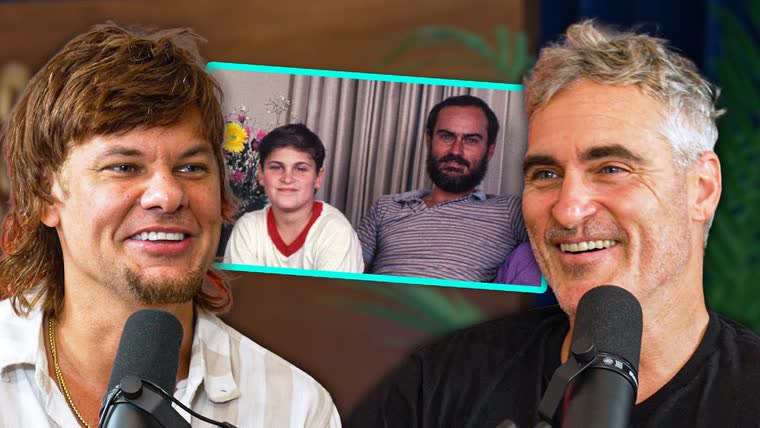
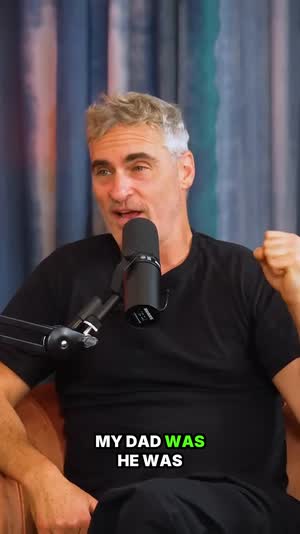
Real ClipSpeedAI output — every clip below was scored, cut, reframed to 9:16 and captioned automatically from the video above it.
The workflow is built backwards from the deadline.
1
Point it at the source
Paste the URL of the broadcast, hearing, presser or commentary episode, or upload the file if it never went online. If the event has not finished yet, connect the channel instead and clipping begins against the live feed. Paid plans handle files up to two hours, which covers most single programmes and a fair number of hearings.
2
It marks what is quotable
The engine reads the transcript for the passages that stand alone as a statement — the admission, the number, the flat denial, the line that will be in everybody's headline by evening. Each becomes a clip bounded by complete sentences. That constraint is editorial as much as technical: half a sentence is a different claim from the whole one.
3
Verify the caption, then ship
Sort by grade, read the caption track on anything containing a name, a figure or a date, and correct it if the transcriber misheard. Then publish or schedule to TikTok, Reels and Shorts. On a fast story the whole loop runs in minutes, which is the only speed at which a news clip is worth making.
Built for the part of the job that has a deadline
News clipping is not a craft problem. It is a latency problem with an accuracy constraint attached.
🔴
Real-time clipping of a live feed
Connect a YouTube, Twitch or Kick channel and clips are produced during the broadcast rather than after a replay finishes processing. When a press conference goes sideways at minute forty, the clip exists at minute forty-one. Most clipping tools cannot touch anything until the VOD lands, which on a breaking story is far too late.
⚖️
Whole-sentence boundaries as an accuracy measure
A quote sliced mid-clause is the fastest way to earn a correction, and the damage is not repaired by a follow-up post. Cuts land at the start and end of sentences, so a speaker's qualifier travels with their claim instead of being lopped off by an automatic timestamp.
📊
Triage by grade when the source is long
A three-hour hearing produces far more candidates than anyone can watch back. The 0-100 grade ranks them by how each opens and where its peak falls, which gives a producer a defensible order to review in rather than a scroll of thumbnails.
🔤
Burned-in captions for muted autoplay
News clips are consumed on silent autoplay more than any other category. Word-by-word captions in eleven styles are rendered into the video itself, so nothing depends on a platform generating its own and nothing breaks when the file is re-uploaded elsewhere.
🗣
Panels and debates stay readable
Two people arguing is the archetypal news clip and the archetypal reframing failure. Speaker tracking follows whoever holds the floor, and split-screen keeps both faces on when the interruption is the story. A fixed crop would sit on the desk between them.
✂️
Dead air and stumbles removed
Pressers are full of shuffling papers, microphone handovers and half-started questions. Silence and filler come out automatically, which compresses a rambling ninety seconds into a tight forty without altering a word of what was actually said.
🚫
No generated footage, ever
There is no text-to-video, no synthetic voice, no AI-created imagery and no reconstruction in this product. Everything in an export originated in the file or stream you supplied. For anybody publishing news, that is not a limitation to apologise for — it is the only workable position.
🖥
Screenshare layout for documents on screen
Commentary that walks through a filing, a chart or a leaked memo needs the document legible, which a vertical crop destroys. The screenshare layout keeps the material whole with the presenter beneath it.
⚡
Push straight to the platforms
Connect TikTok, Instagram and YouTube and post without a download step in the middle. On a story with a two-hour half-life, removing the round trip through your desktop is a real gain rather than a convenience.
🤖
Automate the monitoring workflow
A developer API and an MCP connector mean the pipeline can run without a person clicking anything — a scheduled stream connects, clips arrive, a producer reviews. See the developer docs for the integration details.
Who is clipping news footage
🎙 Independent commentators
A daily show is two hours of material that nobody outside your subscriber base will ever see unless it is cut down.
📺 Digital teams at broadcasters
The social desk is usually one person against a full rundown. Automating the first pass leaves them time to judge rather than scrub.
🏛 Politics and policy channels
Hearings and committee sessions run for hours and contain four minutes anyone will watch. Finding those four minutes is the job.
📈 Markets and finance commentary
A rate decision or an earnings call has a very short window where reaction content travels, and it closes by the following morning.
🏈 Sports talk and post-game shows
Reaction is worthless the next day. Clipping a post-match presser live is the difference between leading the conversation and joining it.
🌍 Local newsrooms
Council meetings and regional pressers are under-covered precisely because clipping them by hand costs more than the story returns.
A news clip has a half-life measured in hours
Everything about this category is downstream of one fact: attention on a story collapses fast. The same forty-five seconds that would have earned two hundred thousand views at nine in the morning earns four thousand at six in the evening, and it is not because the clip got worse. The audience already saw someone else post it.
Traditional editing workflows are structured for quality at the expense of latency. Somebody downloads the VOD, somebody scrubs it, somebody cuts and captions, somebody approves. Each step is reasonable and the sum of them is a clip that arrives after the moment. On a slow feature that is fine. On a breaking story it means you are permanently second.
The reason live clipping matters so much here, and matters less for a podcast or a course, is that it removes the largest fixed delay in the chain. You are not waiting for a broadcast to end, for a replay to process, or for a download to finish. The clip is being cut while the words are still being spoken.
Where you cut a quote is an editorial decision
Automatic clipping tools generally choose boundaries by energy in the waveform or by fixed duration, and both will happily start a clip in the middle of a subordinate clause. In most content that is merely ugly. In news it can invert a meaning: a speaker who said "if the report is accurate, then the minister lied" becomes a speaker who said "the minister lied".
Cutting on complete sentences is not a stylistic preference in that context, it is a guard rail. It does not make a clip fair on its own — you can still select a sentence that misrepresents an argument, and no software can stop you — but it removes the class of error where the tool itself manufactured a misquote while you were not looking.
The same applies to captions. A burned-in caption is a quotation on the record. Transcription is strong on ordinary speech and weak exactly where news is most exposed: surnames, place names, agency acronyms and spoken figures. Reading the caption before publishing takes fifteen seconds and prevents the kind of mistake that gets screenshotted.
What this tool does not do, stated plainly
It does not fact-check. It has no view on whether a claim in your footage is true, and it will grade a confident falsehood highly because confident delivery scores well. Verification is entirely your job and nothing about the interface should be read as implying otherwise.
It does not assess bias, tone or newsworthiness in any journalistic sense. The grade is about how a clip performs as a clip. Those are different questions and conflating them would be a serious mistake in this field.
It does not clear rights. Broadcast footage, wire video and another channel's stream all carry usage terms, and the tool has no knowledge of them. What you are permitted to republish is a legal question for you and your organisation.
And it generates nothing. No synthetic anchor, no AI narration, no illustrative footage invented to fill a gap. That is a deliberate product decision rather than a missing feature, and in news it is the decision that keeps the output defensible.
The mistakes that turn a news clip into a correction
Publishing a figure straight off the caption track. Spoken numbers are where transcription breaks down most often, and a wrong figure burned into the frame cannot be quietly amended once the post is live.
Beginning the clip on the answer. Stripped of the question, a reply reads as a volunteered statement, and that is frequently a materially different thing from what happened. Dragging the in point back by one sentence costs nothing and removes the objection entirely.
Trusting a high grade on something you have not watched end to end. The score describes the shape of a clip and nothing about its substance, so a fluent, confident claim from a source you have not checked will sit near the top of your review list.
Clipping the reaction instead of the event. A commentator responding to a thing is nearly always weaker than the thing, and it goes stale considerably faster.
And leaving attribution to the post text. A clip separates from its caption within an hour of being posted, so anything identifying the speaker and the occasion needs to be inside the frame rather than underneath it.
A live-event workflow for the first thirty minutes
Connect the channel before the event begins rather than during it. Streams that are already twenty minutes in can be joined, but you lose the earlier material, and on a presser the first ten minutes often contain the prepared statement everyone quotes.
Expect to review more than you use. A live feed produces candidates continuously, and the discipline is to look at the top of the graded list rather than everything. Two strong clips shipped in the first ten minutes beat eleven shipped after the news conference ends.
For a recorded programme where speed matters less — a weekly commentary episode, a long interview — the ordinary upload path is simpler and gives you a fuller set to choose from. The podcast clip generator covers that shape of content in more detail.
Automatic clipping versus a producer cutting by hand
Most people frame this as a quality argument, and on any single clip the producer wins. They know the story, they know which sentence the rival outlet already used, and they know that the shrug fifteen seconds after the answer is the actual moment. No scoring model has that context. The comparison that matters on a news desk is not quality per clip, it is coverage per hour, and those are different measurements with different winners.
Say your Tuesday holds a two-hour committee session, a rate decision at midday and a post-match presser at eight in the evening. One person cutting by hand covers one of those properly and skims the other two. An automatic pass covers all three at a consistent standard, which frees the producer to spend forty minutes making the single clip that carries your masthead genuinely good rather than spending forty minutes scrubbing a timeline to find it.
The biggest mistake is treating those two modes as a choice. Run the automatic pass for breadth and the human pass for the piece you actually care about. Where the machine has no answer at all is intent: it cannot know that a minister's pause matters because of something said in a different hearing last month, and it will never grade that pause highly, because as a clip it is four seconds of silence.
There is also a category of work where hand-editing is not merely better but required. Anything with archive footage, a scripted voice track, a graphics package or a lower-third house style belongs in your own edit suite. Export a clean vertical from here and finish it there — the useful division of labour is that this end of the chain finds and cuts, and your suite decorates.
When this is not the right tool, and the alternatives a desk reaches for
If the output is a package rather than a clip, stop here. A two-minute explainer with narration, stills and archive is an edit, not a selection problem, and nothing about automatic boundary detection helps you build one. The same applies to anything airing on broadcast, where the deliverable is a specific codec, a specific loudness target and a house graphics template.
It is also the wrong tool when you already know the exact moment. If you watched the segment live and you can name the timecode, opening the file and dragging two handles is faster than any automated pass, and it would be silly to pretend otherwise. Automation earns its place when the source is long, unwatched, or still running.
On alternatives: platform clip buttons on Twitch, Kick and YouTube are excellent for what they are, which is sharing a landscape link into a chat within seconds. A general video editor is the right answer for packages and for anything needing archive. A transcript search tool will find you a phrase across a season of programmes faster than a clipper will, and if your problem is really retrieval rather than production, that is the category to buy from.
And there is a hard boundary in the product itself: it does not fact-check, it does not clear rights, and it generates no footage. In practice, the desks that get the most out of it treat it as coverage insurance on the hours nobody has time to watch, then hand anything sensitive to a person before it leaves the building. If your bottleneck is verification rather than cutting, this fixes the wrong half of your day.
What clipping news footage at speed has taught us
Observations from operating the pipeline in production — not general advice.
Cutting along a thought rather than a clock position took bad boundaries from 71% to 17%
We audited finished clips against the audio instead of against the transcript, which is the only honest way to judge a boundary, and 71% of endings landed somewhere a listener would call wrong: mid-clause, mid-qualifier, mid-number. Rebuilding selection so a clip runs along a complete thought moved that same measurement to 17%. The uncomfortable detail for anyone auditing their own stack is that the better path already existed in the pipeline and had been left switched off, so the defect was configuration rather than code, and it was invisible from every dashboard we had.
On a live feed the decision is made with only the past available
Given a recorded programme, the engine reads the whole runtime before it commits to anything, so a moment forty minutes in is ranked against every other candidate in the file. Live, that comparison does not exist yet, because the rest of the press conference has not happened. The same event clipped live and clipped later from the replay will not produce an identical set, and it is worth knowing which one you want: the live set is shipped while the story is moving, and the replay set is better sorted.
A burned-in caption is a quotation you cannot quietly amend
Captions are rendered into the frame rather than shipped as a sidecar track, which is why they survive a re-upload to a third platform and cannot drift out of sync after somebody trims the file. The trade is that an error is permanent in every copy that has already travelled. Transcription is strongest on ordinary speech and weakest on surnames, agency acronyms and spoken figures — precisely the words a news clip gets judged on — so reading the caption track before publishing is the cheapest insurance in this entire workflow.
Compared with the usual newsroom options
vs. a producer clipping manually
A skilled social producer makes better individual clips than any automatic system and will always be worth having. What they cannot do is watch a three-hour hearing and a live presser simultaneously. Use the tool for coverage and breadth, and the producer for the pieces going out under the masthead.
vs. waiting for the VOD and clipping afterwards
This is the default workflow and it is the one live clipping replaces. Between a broadcast ending and a replay being downloadable there is usually a gap of anywhere from ten minutes to an hour, and on a fast story that gap is the entire opportunity.
vs. clipping natively on Twitch or YouTube
Platform clip buttons are quick and produce a landscape clip with no captions, no vertical reframe and no way to schedule it elsewhere. They are fine for sharing a link into a chat. They are not a production route for a channel that posts to three platforms.
vs. AI clippers that need a finished file first
Almost all of them require a finished file, which rules them out for anything happening right now. If your work is entirely retrospective analysis, judge instead on cut quality and on how the captions handle proper nouns. The honest test is one real broadcast — run one through.
Frequently asked questions
How do I clip a news broadcast quickly?
Paste the broadcast URL or upload the file, and the engine transcribes it, selects the quotable passages, cuts each on complete sentences, adds burned-in captions and returns them graded 0-100. If the broadcast is still live, connect the channel instead and clips arrive during the stream rather than after it.
Can it really clip a stream while it is still airing?
Yes, for YouTube, Twitch and Kick. This is the feature the page exists for. Clips are produced against the live feed, so a statement made two minutes ago can be posted now instead of after the broadcast ends and the replay processes.
Can I test it on one segment before committing?
Start with the 3-day trial for $1, which is enough to run a single segment or a short presser through and see the cuts on your own material. It takes a card before anything runs, and after the trial it is $39 a month for Pro. Cancelling takes one click.
Does it fact-check anything?
No, and it is important to be blunt about that. It has no ability to judge whether a claim in the footage is accurate and it will score a well-delivered falsehood highly. Verification remains entirely a human responsibility and nothing in the output should be treated as vetted.
Will it truncate a quote and change its meaning?
Boundaries land on whole sentences specifically to prevent that failure. A conditional clause travels with the claim it qualifies rather than being cut away by a timestamp. Selection is still an editorial act — the tool cannot stop you choosing a misleading sentence — but it will not manufacture one for you.
How accurate are the captions on names and numbers?
Ordinary speech transcribes well. Surnames, place names, acronyms and spoken figures are where errors concentrate, which is exactly where news is most exposed. Captions are editable and the standing advice is to read the caption on any clip carrying a name or a number before it goes out.
Does it generate any footage or synthetic audio?
None. There is no text-to-video, no synthetic presenter, no AI narration and no generated imagery in the product at all. Every frame and every spoken word in an export came from the source you supplied.
How long can a broadcast file be?
Two hours per upload on a paid plan. Many hearings and long programmes exceed that, in which case either split the recording or connect the live channel and clip it as it runs, which has no such ceiling on the session length.
What layout works best for a two-person interview?
Split-screen, usually. It keeps both faces visible, which matters when the interruption or the reaction is the point of the clip. Speaker tracking is the alternative when one person clearly dominates and you want a tighter frame on them.
Can I clip a press conference from a YouTube link?
Yes, if it is already posted. If it is happening now and the channel is streaming it live, connecting the channel is the faster path by a wide margin, because you are not waiting for the event to conclude before anything can be cut.
How many clips does a long hearing produce?
More than you can use. A three-hour session can yield dozens of candidates, which is precisely why the grade exists — it gives you a review order so you can stop after the top ten rather than watching everything back.
Do news clips come out watermarked?
No. Exports are clean from the $1 trial onwards, with no mark of ours anywhere in the frame. If your outlet needs its own logo on every clip, set it in the Brand Kit once and it is applied to everything automatically.
Can I add a chyron or lower third?
You can set titles and apply Brand Kit styling, including your logo and colours. There is no full lower-third designer, so if your house style requires a specific graphics package, the practical route is to export clean and add it in your own system.
Which aspect ratios do news clips export in?
9:16 for Shorts, Reels and TikTok, 1:1 for feed placement, and 16:9 if you need a landscape version for a website embed or an internal system. Most news teams take vertical and square from the same source clip.
Can I fix a clip before it goes out?
Yes. Move the in and out points, correct the caption text, change the layout and re-render. On political footage it is common to pull the start point back a sentence so the question that prompted an answer is included, which usually makes the clip both fairer and stronger.
Does it work for radio or audio-only feeds?
The engine is built around video. An audio-only stream has no frames to cut, so there is nothing to reframe or caption over. Simulcast video feeds, which most talk programmes now produce, work normally.
Am I allowed to clip another outlet's broadcast?
The tool will process whatever you point it at, and it has no knowledge of licensing. Broadcast and wire footage carry usage terms, and whether a particular republication is permitted is a legal judgement for you and your organisation to make.
Can I schedule clips rather than posting immediately?
Yes, and it is worth using for follow-up coverage even when the first clip goes out instantly. Connect TikTok, Instagram and YouTube and queue the secondary clips across the following day while the story is still developing.
How fast is processing on an uploaded file?
Typically a few minutes for a normal programme length, longer for a full two hours or during heavy load. For anything where minutes matter, the live path avoids the upload and the wait entirely, which is the reason it exists.
Is there an API for a monitoring setup?
Yes. A developer API and an MCP connector are available, so a newsroom can wire scheduled streams in and have clips waiting for review without anyone starting a job by hand. The integration guide is in the developer docs.
Does the grade reflect newsworthiness?
No. It reflects how the clip functions as a clip — the opening, the pacing, the placement of its strongest beat. A procedurally dull but genuinely important exchange will score low. Treat the grade as a production signal and never as an editorial one.
Can it identify who is speaking?
It tracks and follows the active speaker visually, which is what drives the framing, but it does not label people by name or maintain a speaker directory. Attribution in your caption or title is something you write yourself.
Does it remove crosstalk and interruptions?
Silence and filler are removed; overlapping speech is left intact because it is often the substance of the clip. Panel crosstalk transcribes imperfectly, so those clips in particular deserve a caption check before they go out.
What happens to broadcast footage I upload?
Source material is used to cut your clips and then left alone — we publish nothing, and the output belongs to whoever supplied the footage. Newsrooms with retention policies should read the privacy policy, which spells out storage and handling.
Is this a replacement for a social producer?
No, and framing it that way leads to bad outcomes in a newsroom. It removes the scrubbing and the mechanical cutting. Judgement about what to publish, how to frame it and whether it holds up is exactly the part that should stay with a person.
Can I run this from a phone during a breaking story?
Yes. Connecting a stream and reviewing clips both work from a phone, which matters when a story breaks and you are not at a desk. Reading captions on a small screen is harder, so verify figures carefully in that situation.
Can I cancel after covering one news cycle?
Yes. One click from the account page ends it, and we email before a trial rolls into a subscription so no charge turns up unannounced. Running it hard across a single busy week and then stopping is a perfectly reasonable way to evaluate it. Access holds until the end of whatever period you have already paid for.
What is the best first test?
A live stream of an event you would have clipped manually anyway. Run both in parallel for one broadcast and compare what came back against what you cut yourself, and how long each took. That comparison answers the question in a single news cycle.
Connect a channel before the next live broadcast
The clearest test of this is a story you would have covered regardless. Clip it live, clip it by hand, and compare both the output and the clock.