Two hours in. The ninety seconds worth keeping out
Converting a long video into a short one is not a file operation, it is a series of choices about what to leave behind. This tool makes those choices: it reads the whole runtime, keeps the passages that survive on their own, trims each to a postable length on sentence boundaries, and rebuilds the frame vertically with captions burned in.
🎬 Enter any URL under 2 hours
⏱ That video is longer than we can process
Sources up to two hours on every plan
Three-day trial to start, from $1
Length and aspect ratio both handled
Cuts on sentence boundaries, never mid-word
Clips come back ranked, not in a heap
One long video in, a week of posts out
Paste a link. Get the best moments.
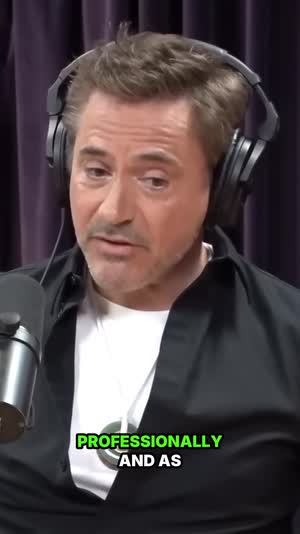
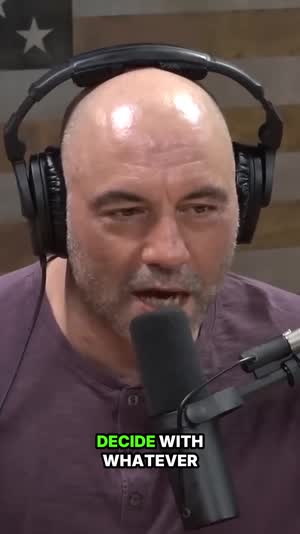
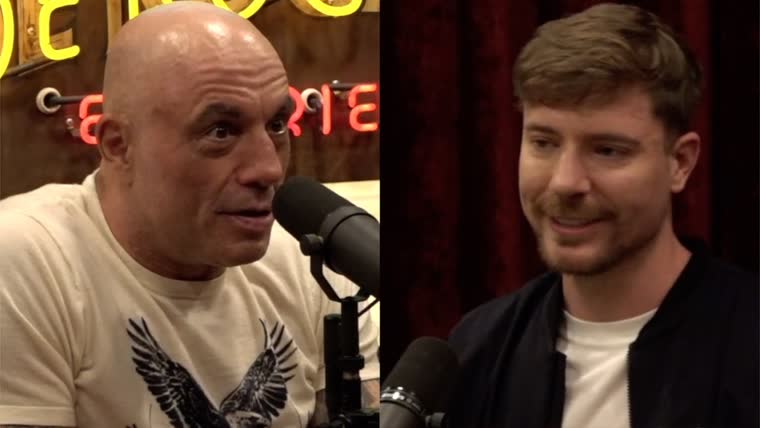
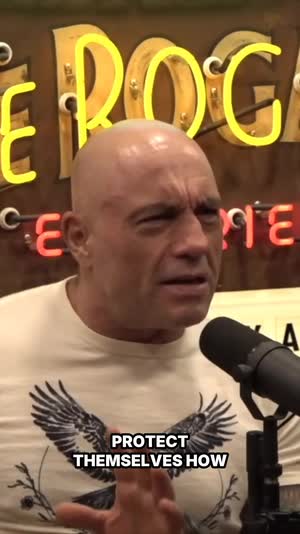
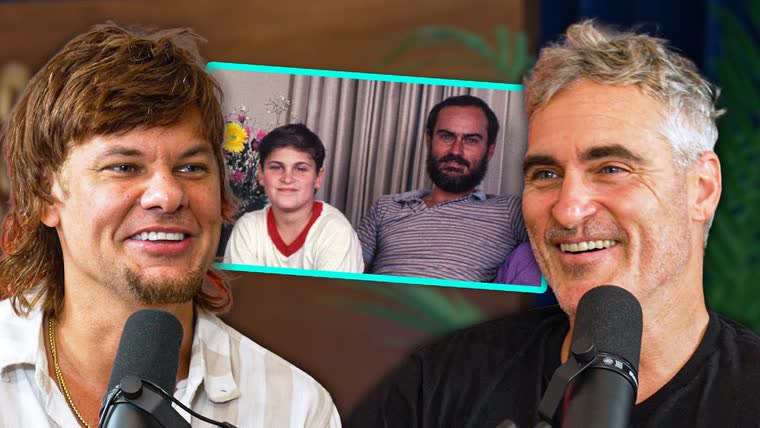
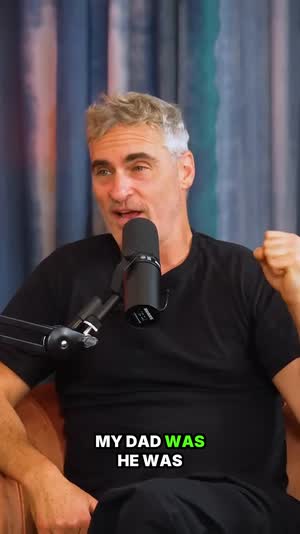
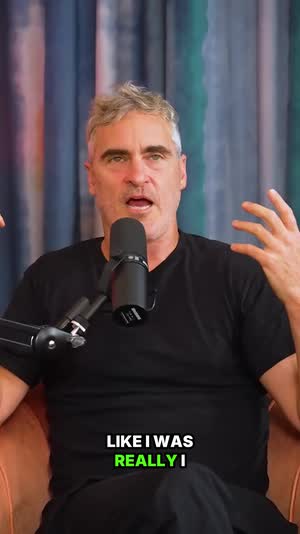
Real ClipSpeedAI output — every clip below was scored, cut, reframed to 9:16 and captioned automatically from the video above it.
The conversion is one submission and one review pass. There is no timeline in between.
1
Submit the long file or its link
Paste a YouTube URL or upload the file directly. A ninety-minute interview, a two-hour workshop recording, a stream replay — all of it goes in whole, with no requirement to pre-trim or mark chapters. The one-dollar trial takes the same two-hour sources any plan does, which is enough to test a full podcast episode or a conference talk before you commit to anything.
2
The engine decides what survives
This is where the compression really happens. Every passage is assessed for whether it makes sense in isolation, and the ones that lean on earlier context get dropped no matter how good they were in the room. What remains is trimmed to the natural start and end of the thought, so the short version is a complete unit rather than a slice of a longer one.
3
Collect finished shorts, ranked
Each output is vertical, captioned, filler-free and carries a 0-100 grade. From a two-hour source you might end up with fifteen or twenty candidates, and the ranking is what makes that number useful instead of overwhelming. Download them, or queue them straight to TikTok, Reels and Shorts.
What the converter handles for you
Length, framing, pacing and text — the four things that all change when a long video becomes a short one.
📏
Built for genuinely long sources
Two hours per video on a paid plan, which covers nearly every podcast episode, lecture, sermon, webinar and stream replay people actually submit. The engine is not scanning the first few minutes and guessing about the rest — the entire runtime is read before any clip is proposed, which is what stops the best moment at the ninety-minute mark from being missed.
🎯
Compression by selection, not by speed-up
There is a lazy way to shorten a video: play it faster, jump-cut every pause, and call the result condensed. That produces something shorter and worse. Here the reduction comes from choosing entire passages to keep and discarding the rest, so what you post runs at normal speed and sounds like the person actually talking.
📐
Aspect ratio converted at the same time
Long video is nearly always widescreen and short video is nearly always vertical, so duration is rarely the only conversion needed. Output can be 9:16, 1:1 or 16:9, and the vertical crop tracks the speaking face rather than pinning to the centre of the original frame.
✂️
Sentence-accurate in and out points
A converter that cuts at a fixed offset will happily start your short halfway through the word "because". Boundaries here come from the transcript, so each short begins where a sentence begins. If you want a different edge, the in and out points are adjustable afterwards and the clip re-renders.
🔤
Captions sized for the short format
Text that was unnecessary on a widescreen upload becomes mandatory on a vertical one, because short-form is watched on mute by default. Word-by-word captions are burned into the export in your choice of eleven styles, so nothing needs re-syncing after a trim.
🔇
Slack removed automatically
Long-form tolerates a pause; forty seconds does not. Silences, hesitations and false starts are cut during conversion, which typically tightens a clip by several seconds. That reclaimed time is the difference between a short that moves and one a viewer abandons early.
📊
A ranking so the volume is usable
Converting two hours into twenty shorts creates a second decision: which of the twenty. Every output gets a 0-100 grade, so you can post the strongest four this week and keep the rest as backlog rather than dumping everything and diluting the account.
🔴
No length limit at all on live sources
A six-hour broadcast never has to be converted as a file. Connect the YouTube, Twitch or Kick channel and clips are cut continuously while the stream runs, which sidesteps the upload cap and produces the shorts before the stream has even ended.
🗂
Layouts that keep long-form detail readable
Screenshare footage and multi-person panels lose the most in conversion, because the crop is fighting more content. Split, three-up, four-up, screenshare and gameplay picture-in-picture exist so that a slide stays legible and a four-way conversation does not become one person and three elbows.
The long formats people convert most
🎧 Full podcast episodes
Ninety minutes of conversation, a dozen postable moments. Episode-specific handling is covered on the podcast clip generator page.
🖥 Webinars and demos
The objection-handling section is usually the strongest sixty seconds in the whole recording, and it is always buried past the halfway point where nobody rewatches.
🎓 Lectures and long tutorials
A single well-explained concept converts into a short that outperforms the full lesson it came from, and sends people back to the long version.
⛪ Services and long talks
One address contains several passages that stand alone. Converting them is how the message reaches people who would never sit through the recording.
🕹 Stream VODs
Four hours down to the six moments worth rewatching. For anyone streaming regularly, the live route is faster than converting the VOD afterwards.
🏛 Panels, keynotes and Q&As
Conference footage is dense with quotable answers separated by long stretches of nothing. Selection matters more here than in any other format.
Two different jobs share this name
Search for a long video to short video converter and you will find two unrelated products wearing the same label. One is a resizer: it changes the frame from 16:9 to 9:16 and leaves the duration alone. The other is a summariser: it shortens the running time and leaves the frame alone. Neither on its own gets you something you can post.
A finished short needs both operations plus a third nobody advertises — deciding which section to keep. Resizing a ninety-minute video gives you a ninety-minute vertical video, which no platform will accept as a Short. Cutting the length without reframing gives you a widescreen clip that occupies a quarter of a phone screen. This tool does all three in one pass, and the third one is the part that actually takes intelligence.
It is worth knowing which of the two you came for. If you genuinely only need an aspect-ratio change on a clip you have already chosen, this is more machinery than the job requires. If you have a long recording and no idea where the good part is, that is precisely the case this was built for.
The arithmetic of what gets discarded
A two-hour recording is about seven thousand seconds. A short that performs well tends to run somewhere between fifteen and sixty. That means a successful conversion keeps under one percent of what you recorded and throws the rest away, several times over, into separate independent clips.
Once you see the ratio, the interesting question stops being how the software cuts and becomes how it chooses. Any tool can remove ninety-nine percent of a file. Removing the correct ninety-nine percent is the entire product, and it is why selection here works from the meaning of the transcript rather than from waveform peaks or scene changes.
It also explains why long sources often convert better than short ones. Two hours of talking contains more genuinely strong moments than fifteen minutes does, even if the hit rate per minute is lower. People are frequently surprised that their sprawling, unedited recordings produce a better shortlist than their tightly-scripted ones.
The length limits, stated without hedging
The one-dollar trial accepts exactly what a full plan accepts. That is worth saying plainly, because the usual pattern in this category is a stunted first run: here a fifty-minute episode goes through on day one — a full talk, a podcast segment, a stream highlight reel — the same way it would in month six, which is the only way a first test tells you anything.
Every plan takes up to two hours per submission. Above that, you have two good options. Split the file at a natural break and submit each half, which costs you nothing in quality because clips are self-contained anyway. Or, if the source is a broadcast, connect the channel and let live clipping run for as long as you are on air, since that path has no per-file ceiling.
There is also a floor worth knowing about: very short sources have little to select from, and submitting a two-minute video mostly returns the same two minutes with captions on it. The tool earns its place when there is more footage than you want to watch.
A conversion routine for a long-form channel
If you publish long-form on a schedule, the sensible pattern is to convert every episode on the day it goes up, not in a batch at the end of the month. Two reasons: your memory of the recording is still fresh enough to sanity-check the selection, and the shorts can point at a long video that is currently new rather than one from six weeks ago.
Do not review every output. That is the mistake that turns a ten-minute task back into an afternoon. Watch the top four or five by score, keep what you like, and let the rest sit in the library as a backlog for weeks when you record nothing. A backlog of unposted clips is an asset, not waste.
Then space the posting out. Publishing fifteen shorts from one episode in a single day competes with itself and exhausts the material in an afternoon. The same fifteen spread across a fortnight gives each one a fair test and keeps the account active on days you are not recording, which is most of them.
One more thing worth doing once: convert your single best-performing old video before you touch anything new. Your back catalogue has already been validated by an audience, and it is sitting there converting nothing.
Three mistakes that make a converted short unwatchable
Three mistakes account for nearly every bad conversion, and all three are avoidable. The first is the mid-sentence start, which announces automation in the first half-second and loses the viewer before the content has a chance. Cutting to sentence boundaries fixes it.
The second is a crop that framed the wrong thing. Vertical conversion discards most of the width, and a fixed centre crop applied to a two-person shot centres the space between them. Following the active speaker is the only reliable fix, and it matters most on exactly the long-form interview content people convert most often.
The third is missing context. Some moments simply do not survive extraction because they refer to something said earlier, and no amount of caption styling rescues them. The engine tries to filter those out at the selection stage, which is a large part of why the shortlist is shorter than the number of clips it could technically have produced.
Troubleshooting a long source that converted badly
The complaint we hear most about long sources is a shortlist that looks thin beside the runtime: eight shorts out of two hours when you were braced for thirty. Runtime is not the variable that sets that number, speech density is. Two hours of a conference day is largely introductions, transitions, room noise and questions asked away from a microphone, and none of that reaches the ranking at all. Count the minutes in your own recording where somebody is making a point in complete sentences, and the shortlist normally makes sense against that figure rather than against the duration.
Output of wildly uneven quality from one submission usually points at a recording that changed partway through rather than at an inconsistent pass. A move from a desk microphone to a lapel, a panel section, a clip played from a laptop into the room — each of those alters what the transcript captures, and the transcript is the material selection works from. When the weak results cluster in one stretch of the timeline rather than scattering through it, listen back to that stretch specifically before re-running anything.
If a moment you know is strong never appears at all, test it against the question the selector is asking: does it stand up without the twenty minutes in front of it. Passages that resolve a thread opened much earlier are held back deliberately, because they read as incomplete to somebody meeting them cold. You are not stuck with that judgement — open the nearest clip, drag the in-point back to where the setup begins, and re-render with the context restored.
When the source is longer than the ceiling the answer is a split rather than a retry, and where you split matters more than people expect. Cut at a natural break — a chapter marker, an ad read, the point a new guest arrives — because a split that lands inside an answer loses that answer from both halves. Each half is then read entirely on its own, so treat what comes back as two separate rankings rather than one list of twenty.
What manual editing still does better on a long recording
On a long source the balance tips further towards automation than the usual comparison admits, and the reason is search rather than craft. Somebody converting a two-hour recording by hand spends most of the elapsed time not editing at all but scrubbing, and scrubbing does not get faster with experience the way cutting does. The trimming, captioning and reframing that follow are perhaps a quarter of the work. Automating the quarter is a convenience; automating the search is what decides whether the job happens.
What manual editing keeps is everything that depends on knowing why the recording exists. An editor watching a three-hour workshop knows the section people will want is the moment the room finally understood something, even when it is quiet, hesitant and unremarkable on the page. They can also build across the timeline — pairing a question asked at minute twelve with the answer that only arrived at minute ninety — and nothing produced here does that, because every output is one unbroken run of the source with the slack removed.
The comparison that settles it is measured per minute of source, not per clip. Say you have forty hours of back catalogue sitting in a folder. By hand that is a project with a start date and no realistic finish. Converted, it is a background queue you feed over a fortnight and review in a handful of sittings. Nobody would argue the automated version matches a careful editor clip for clip; the point is that the careful version of forty hours never happens, and a fortnight of graded shortlists does.
The arrangement most long-form teams settle into divides by where the value actually sits. The engine takes the archive and every new episode. A person takes the two or three pieces a quarter that get pinned, run as ads or shown to a client — and they generally start from an automated cut rather than from raw footage, which takes the search out of the human job as well, since that was always the expensive half of it.
Alternatives to conversion, and the case for each one
Chapters are the alternative almost nobody counts. If the long video is already published, timestamped chapters cost you ten minutes and make the runtime navigable without producing a single new file. They do nothing for reach, because a chapter is not distributable, but for a tutorial or a reference recording where people are searching inside the video rather than discovering it, chapters answer the real question more directly than any clip does.
A written post is the alternative when the value of the recording is the information rather than the delivery. A ninety-minute technical walkthrough frequently makes a better article than it makes a short, because reading is faster than watching for anything procedural, and the transcript needed to write it already exists. Where that breaks down is material carried by tone, timing or a face: an answer that works because of how it was said flattens into an ordinary sentence on a page.
Trimming two or three clips yourself deserves to be taken seriously rather than waved away. If you sat through the recording live and remember the moments, a free cutter and twenty minutes gets you there with complete control of every boundary and nothing to pay. The case for automation strengthens in direct proportion to how much of the footage you have not watched, which is why it is overwhelming on an archive and marginal on this morning's call.
The last alternative is repurposing the recording into a different long form rather than into shorts at all — an audio version for a podcast feed, a full written transcript, a slide summary. Those reach people who will not watch video, and they cost close to nothing once the transcript exists. They are not competitors to conversion, they are the cheap adjacent work most channels never do, and they are worth naming here because people arrive at a converter assuming shorts are the only way to get more out of an hour of footage.
What we have learned converting long sources
Observations from operating the pipeline in production — not general advice.
Two hours is the ceiling on every paid tier, including the largest
The cap on a single submission is one hundred and twenty minutes, and it is the same number on the fifteen-dollar plan as on the biggest one in the list. What money buys here is monthly capacity rather than a longer file — one tier carries 150 minutes of source a month, the next carries 300 for uploads — so a three-hour recording gets split whatever you are paying. It is worth planning around, because people routinely read the ceiling as a pricing lever and hold off submitting an archive until they upgrade, when the archive was always going to need cutting in half.
A credit is one minute of source, so the price is fixed before a clip exists
Metering runs on what you submit rather than on what comes back. One credit is one minute of source runtime, rounded up, with a floor of one — so a 118-minute episode costs 118 whether the shortlist returns four clips or twenty-four. The part people miss is that cost per usable short is therefore a property of your recording and not of the software: two sources of identical length, one dense and one discursive, are charged identically and hand back very different numbers of postable clips. In practice that is the argument for converting the recording you already know performed before working through an archive in date order.
A length we cannot read up front is charged as an estimate, then trued up
Duration normally comes off the link or the file header before anything is transferred, but now and then it comes back empty. Rather than refuse a legitimate video on that basis, a validated link is charged a deliberately conservative fifteen-minute estimate and the real figure is probed once the download completes. Three things can follow: the actual runtime lands under the estimate and nothing more is taken, it lands over and only the difference is charged, or it turns out to exceed the ceiling altogether, in which case the charge is returned and the job fails cleanly instead of converting half a source. That reconciliation is why an unusually long file occasionally stops several minutes in rather than at the door.
Other ways to shorten a long video
vs. a video trimmer or cutter
A trimmer executes a decision you have already made — you supply the timecodes, it produces the file. That is fine when you watched the recording live and remember the good bits. It is useless against a two-hour video you have never seen, which is the situation most people are in when they search for a converter.
vs. speeding the video up
Playback-rate compression keeps everything and respects nothing. A ninety-minute talk at double speed is a forty-five-minute talk nobody wants either, and short-form platforms are not the destination for it. Reduction has to be by removal, not by acceleration.
vs. an AI summariser that outputs text
Text summarisers are genuinely good at telling you what a long video contained. They cannot hand you something to post, because the value of a clip is the delivery — the tone, the pause, the face. A summary of a great answer is not a substitute for the answer.
vs. other conversion tools
Most competitors handle finished uploads only and cap out below two hours. Two differences here are worth checking against whatever else you are trying: the length ceiling on a single submission, and whether live broadcasts can be clipped without a file at all. See the AI clip generator overview for how the rest of the engine fits together.
Frequently asked questions
How do I convert a long video into short videos?
Paste the link or upload the file at the top of this page and let it process. The AI selects the sections worth publishing, converts each to vertical, adds captions and returns them graded. You review a handful of finished shorts rather than building any of them yourself.
What is the longest video I can convert?
Two hours per submission on every plan, the one-dollar trial included, with a floor of two minutes. For a source longer than two hours, split it at a natural break — clips are self-contained, so nothing is lost by processing halves separately.
Why is the trial only three days?
Because three days is enough to put a real recording through and read the result, and a longer window mostly postpones the decision rather than improving it. A two-hour source is accepted from the first submission, so nothing you see in those three days is a reduced version of the product.
How short are the output clips?
Most land somewhere between fifteen seconds and about a minute, because that is the range where a complete spoken thought fits comfortably. The exact length follows the content rather than a fixed target — a clip ends where the point finishes, not at a round number.
How many shorts will a one-hour video produce?
Commonly somewhere around eight to fifteen, though it depends far more on the density of the conversation than on the duration. An hour of tight interview yields more than an hour of loose chat, and the scores will tell you which of them deserve a slot.
Does converting reduce the video quality?
The clip inherits whatever the source gave it. Cropping to vertical uses a portion of the original frame, so a sharp recording stays sharp and a soft one stays soft. Nothing is upscaled or invented — if the source is low resolution, the short will be too.
Can I control where each clip starts and ends?
The AI proposes the boundaries and you can move them. Open the clip, adjust the in and out points, and re-render. Most people leave them alone because the sentence-aligned defaults are usually where they would have cut anyway.
Does it change the aspect ratio as well as the length?
Yes, both happen in the same pass. You can take 9:16 for TikTok, Reels and Shorts, 1:1 for feed posts, or 16:9 if you want a short landscape cut for a website or an email.
What file formats can I upload?
Standard video files from cameras, phones, screen recorders and conferencing tools work. If you have a YouTube link instead, use that — it skips the upload entirely, which on a two-hour file saves a meaningful amount of waiting.
How long does converting a two-hour video take?
Longer than a short one, naturally, but it is a background job measured in minutes rather than hours. You can close the tab; the finished clips sit in your library when you return.
Can I convert a live stream instead of the recording?
Yes, and it is usually the better route for broadcasters. Connect a YouTube, Twitch or Kick channel and clips are produced during the stream, which avoids the file cap and gets the moment out while it is still current.
Is there a watermark on converted clips?
No. Every export comes back clean, from the first clip you cut on the one-dollar trial onwards. The Brand Kit will add your own logo instead if you want a mark on everything you publish.
Do the shorts get captions automatically?
Every clip is captioned without you asking, word by word and in sync with the audio, rendered into the video. Eleven caption styles are available and switching between them re-renders the clip.
Will it cut the video in the middle of a sentence?
It should not. Boundaries come from the transcript, so cuts land where sentences do. This is deliberate: an abrupt start is the single most common reason a converted clip reads as machine output.
Can it handle a video with multiple speakers?
Yes, and it is one of the cases the framing logic exists for. Tracking follows whoever is speaking, and split-screen or grid layouts keep several people on screen when the conversation is going back and forth quickly.
Does it work on screen recordings and slide decks?
It does, with a screenshare layout that keeps the shared content readable in a vertical frame. Be aware that dense slides with small text convert poorly to a phone screen regardless of tooling — that is a limitation of the format, not the software.
Can I convert a video that has no speech?
You can submit it, but most of the value will be missing. Selection relies on understanding what is being said, and captions need words. Silent footage is better served by a manual trimmer.
What does the converter cost?
It starts at one dollar for a three-day trial, which exists so you can see the output on your own material rather than on a sample reel. Continuing after those three days costs thirty-nine dollars a month for Pro.
Can I stop paying once my back catalogue is converted?
Yes, and plenty of people do exactly that — convert the archive over a month or two, then cancel in one click from the account page. We email before the trial converts so nothing charges quietly, and cancelling leaves your access intact until the paid period ends.
Can I schedule the shorts once they are converted?
Yes. Link your TikTok, Instagram and YouTube accounts and either post immediately or place clips into a calendar. Converting and scheduling in one place is what turns a single long recording into a filled week.
Does it remove pauses and filler words?
Automatically, as part of the conversion. Dead air that was tolerable in a long recording is fatal in a forty-second one, so it comes out by default rather than as an option you have to find.
Can I convert several long videos at once?
You can submit them one after another without waiting for each to finish, and they process in the queue. For high-volume workflows the API is the better answer, since it lets you submit programmatically from your own system — see the developer docs.
Does it work on a phone or tablet?
Yes, in the browser. Submitting a link, watching for completion and downloading the finished shorts all work on mobile, which is convenient given that the destination for the clips is a phone app anyway.
What if the video is in a language other than English?
Transcription and captions handle major languages, with English the most accurate. Note that we transcribe the language being spoken and do not translate it, so a Spanish source produces Spanish captions.
Will the same video always produce the same clips?
Broadly yes — the selection is driven by what is in the content, so the strong moments come back consistently. Small variations at the margins are normal, particularly among segments that score closely.
Can I convert a video someone else uploaded?
The converter accepts any link it can reach. Whether the result can be published is a rights question tied to the source material and the platform you post to, and that decision sits with you.
Where do my uploaded files go?
They are processed to produce your clips and are not published or shared by us. What we keep, and for how long, is written out in the privacy policy.
What if none of the converted shorts are good?
Then the source probably did not contain a strong self-contained moment, and that is useful information about the recording rather than the tool. Run the trial first on something you already believe has a good moment in it, so you are testing the selection and not the footage.
Point it at your longest recording
The longer and less edited the source, the more obvious the difference is. Anything up to two hours goes in whole, trial included.