Kick streams, clipped natively — live or from the VOD
Most clipping tools were built for YouTube and Twitch and never got around to Kick, which leaves Kick streamers downloading their own VODs and cutting them by hand. This one takes a Kick channel directly, produces clips while the broadcast is running, and hands them back vertical, captioned and ranked.
🎬 Enter any URL under 2 hours
⏱ That video is longer than we can process
Kick supported natively, not as a workaround
Clips cut during the broadcast
Or process a finished VOD
9:16 with the facecam kept in frame
Burned-in word-level captions
One long video in, a week of posts out
Paste a link. Get the best moments.
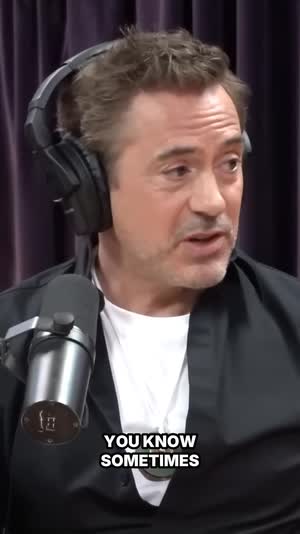
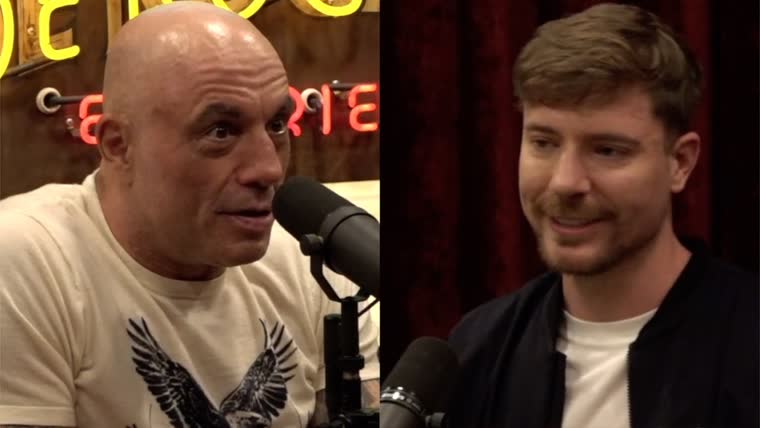
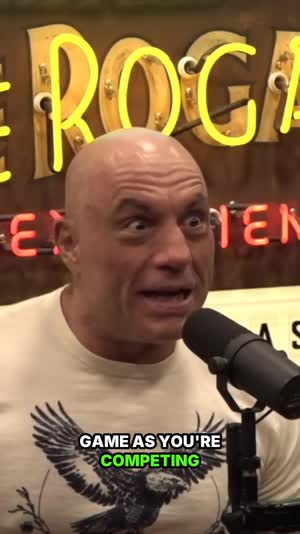
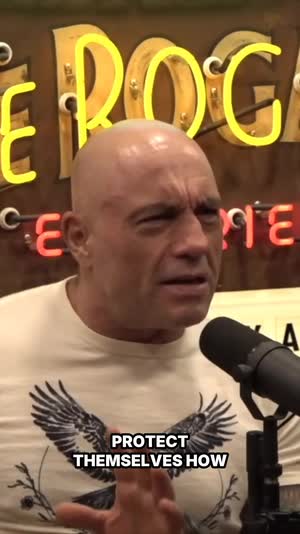
Real ClipSpeedAI output — every clip below was scored, cut, reframed to 9:16 and captioned automatically from the video above it.
Nothing to install on your streaming machine, and no manual VOD download.
1
Connect the Kick channel
Point the app at your Kick channel and open a live clipping session. It runs against the broadcast itself, so there is no OBS plugin, no browser source and no change to your scene collection or bitrate. If you would rather work from a finished stream, download the VOD from Kick and upload the file — pasting a Kick /videos/ link is refused, because we cannot verify a stream recording's length before it enters the pipeline and an unbounded upload is how people lose an hour waiting for something that was never going to finish.
2
Detection runs while the stream runs
As the broadcast comes in, the model tracks what is being said and how the audio moves, and marks segments that would hold someone who has never watched you before. Each one is cut so it begins at the start of a sentence, which keeps the clip from opening mid-syllable — the single most obvious sign that something was auto-generated.
3
Take the finished clips
Clips arrive vertical, with the crop tracking whoever is talking, the facecam preserved over gameplay where that layout fits, captions burned in and timed word by word, and dead air already removed. A score out of a hundred comes with each one so a long session sorts itself.
4
Post them, or schedule them out
Send clips to TikTok, Instagram Reels and YouTube Shorts directly, or stack them on the calendar to drip across the days you are not live. Because clips exist during the broadcast, a good one can be up while the stream it came from is still going and still joinable.
Why Kick streamers end up here
Kick grew faster than the tooling around it. This is the gap.
🟩
Kick is a first-class input
You are not downloading a VOD, re-uploading it somewhere and hoping the audio survives. The channel goes in directly, the same way a YouTube or Twitch channel does, which for a Kick streamer is genuinely unusual — the platform is where most clipping tools stop short.
🔴
Real-time clipping during a Kick broadcast
Clips are produced live rather than after the fact. On a platform where a lot of the audience is discovering channels through short-form, being able to post a moment on the same night it happened is worth more than any editing polish you would add later.
🧭
It reads long sessions without you rewatching them
Kick streams run long, and an eight-hour session is not something anyone reviews properly. The model goes through the whole thing looking for self-contained moments, so you are reading a shortlist instead of dragging a playhead across an evening of footage.
📱
Vertical reframe that keeps the person in shot
Turning a widescreen stream into a 9:16 clip throws away most of the picture. Speaker tracking decides what survives, so a Just Chatting segment keeps your face centred rather than centring the wall behind you, and a wide two-person setup can go split-screen instead.
🎮
Facecam over the gameplay
The picture-in-picture layout keeps your webcam on top of the game so the reaction and the play are both in the vertical frame. Detail on how layout selection works is on the gaming clip generator page.
🔤
Captions that survive loud stream audio
Between game sound, alerts and a mic pushed hard, stream audio is not clean. Word-level captions burned into the file carry the meaning through that, and through the fact that a large share of short-form viewing happens with sound off entirely.
📊
Every clip graded out of a hundred
A long broadcast can produce more candidates than you have posting slots. The grade — based on the opening, the pacing and where the peak sits — turns a pile of files into an order, so the strongest three go out and the rest wait.
✂️
Silence and filler cut out
Queue time, loading, half-sentences while you read a donation: all trimmed. Live content has a much looser baseline than edited video, so this step tends to tighten a Kick clip more noticeably than it would a scripted one.
🏷
Brand Kit for a consistent channel look
Store your colours, fonts and logo once and every clip carries them. On a platform where a lot of growth comes from people meeting you on TikTok first, having your clips look like a set rather than a scattering is doing real work.
🤖
API and MCP access
A developer API drives the same engine, and the MCP connector lets Claude start a session or pull finished clips in conversation. If you already automate your going-live routine, clipping can hang off the same trigger — see the API docs.
Who is using it on Kick
💬 Just Chatting and IRL broadcasters
Speech-heavy content is the easiest case for moment detection, and vertical reframing on a talking head is close to free.
🎮 Kick gaming channels
Long sessions, sparse highlights. Picture-in-picture keeps your reaction attached to the play instead of cropping it out.
🔀 Multistreamers
If you run Kick alongside Twitch and YouTube, one account clips all three. The Twitch clip generator page covers the Twitch side.
🆕 Streamers who recently moved to Kick
A smaller platform audience makes off-platform short-form more important, not less, because that is where new viewers first find you.
✂️ Kick clip channels and editors
People who clip for others were the hardest hit by Kick support being missing everywhere. Native input removes the download-and-reupload step entirely.
📈 Anyone growing on TikTok first
Short-form is the funnel and the stream is the destination. Volume matters, and volume is what automated clipping is for.
The tooling gap Kick streamers keep running into
Kick arrived quickly and pulled over a lot of established streamers, mostly on the strength of its revenue terms. What did not arrive with them was the surrounding ecosystem. Ask most AI clipping products for Kick support and you get a YouTube field, a Twitch field, and an upload button — which means the workflow becomes: download your own VOD, wait for a multi-gigabyte file, upload it again somewhere else, and only then start clipping.
That is not merely annoying, it kills the habit. Anything with four manual steps in front of it stops happening after the second week, and the streamers who most need short-form distribution are exactly the ones with the least appetite for a nightly file-shuffling routine.
Accepting a Kick channel directly removes all of it. The input is a channel, the output is finished clips, and there is no intermediate file that has to live on your drive at any point.
Clipping live versus clipping the VOD
Both work here, and they serve different purposes. Live mode is for reach on the same day: a clip that goes out while you are on air points at a stream a viewer can join immediately, so it functions as an ad rather than an archive. It also means nothing depends on you remembering a moment hours later.
The VOD route is for going backwards. Most channels have a substantial history that has never produced a single short-form post, and that back catalogue is free inventory. Paste the link or upload the recording; every plan takes up to two hours at a time, the $1 trial included, so split a marathon session at a natural break and run it in pieces. The trial is the cheap way to test cut quality on your own footage before committing to a month.
The output is identical either way — the same detection, the same layouts, the same scoring. Only the timing differs, and with it what the clip can be used for.
Pitfalls that make Kick clips underperform
Cross-posting the raw widescreen VOD segment is the first one. A landscape clip in a vertical feed occupies a third of the screen and reads as somebody else's content pasted in. If nothing else changes, reframing does more for performance than any amount of moment selection.
Relying on a moment that needed your community is the second. Kick audiences are tight-knit and a lot of the best moments are inside jokes, which is exactly the category that dies with strangers. The clips that travel are the ones a person with no history with you can follow from a cold start.
The third is treating clip volume as the metric. Twenty posts a day from one stream does not accumulate an audience, it trains people to scroll past your handle. Take the top few, hold the rest, and let a week of consistency do the work that a single dump cannot.
The fourth is losing the source. A stream you never clipped and never recorded locally cannot be recovered later from anywhere, which is the strongest practical argument for leaving a live session running by default rather than deciding after the fact.
A posting cadence that fits a Kick schedule
Kick streamers tend to broadcast long and often, which is an advantage for short-form if the output is spread rather than dumped. A workable pattern is one clip posted the same night, while the people who saw it live will engage with it, and two or three scheduled across the following days.
Point every clip somewhere. A caption naming the channel, or an end frame with your Kick handle, converts a viewer who liked the clip into someone who can find the stream. Clips that do not identify their source are entertainment for a stranger and nothing more.
Keep a small reserve. Sessions get cancelled, internet drops, life happens; two evergreen clips sitting unposted mean the feed keeps moving on the week you do not go live at all.
Fixing a Kick session that comes back empty
The channel reads as offline while you are visibly live. Most streamers who report this are pointed at a video URL left over from a previous broadcast rather than at the channel itself, and a stale link cannot attach to a stream that is running now. Stop the session, paste the plain channel address, start again. If the channel is right and it still will not attach, wait a minute and retry — a lookup that fails is deliberately treated as unknown rather than as offline, and it usually resolves on its own.
The session ran but the library is empty. Three causes, in order of likelihood: the broadcast was behind a sign-in and could not be read at all, the stretch it watched genuinely had no speech worth grading, or the session went on late. Say you stream four hours on a weeknight and open the session at hour two — everything before that point is unreachable, because a live session only ever watches forward from the moment it attaches.
Clips arrive but the facecam is missing from them. Override the layout on that clip and render again. When it happens across a whole session rather than on one file, the cause is usually where your camera sits in the scene: a cam pushed hard into a corner is the first thing a 9:16 frame discards, and moving it a few percent inward fixes every future clip at once.
The same word comes out wrong in every caption. That is almost always a name, a piece of game jargon, or a microphone sitting underneath the game bus — not a general transcription problem. Check your levels before you blame the transcript, then correct the words and render again, since the corrections carry into the new file.
A Kick VOD link will not process. This is deliberate, not a bug. We cannot verify how long a stream recording is before it enters the pipeline, and admitting an unbounded one is how somebody waits an hour for a job that was never going to finish, so the URL is refused up front rather than failing later. Download the recording from Kick and upload the file instead — that path is length-checked at the door and works normally. Live clipping, where you connect the channel and clips are cut during the broadcast, is unaffected and is the faster route anyway.
When this is not the right tool for a Kick channel
A near-silent broadcast is the clearest case. Detection reads speech and audio, so a high-skill grind with no commentary leaves the model almost nothing to grade, and the honest output is a shortlist of two rather than a padded list of twenty. In practice the channels that get least from automated clipping are frequently the ones already posting least, which is an uncomfortable thing to write on a page like this and still true.
It is also the wrong instrument when what you want is one perfect clip. Automation is coverage — it watches the hours nobody is going to rewatch and hands back an ordered shortlist. A channel trailer with music, beat-matched cuts and a designed end card is an editor and an evening, and no ranking model replaces that.
A private or subscriber-only broadcast is outside the scope entirely, because a session reads the same public feed any viewer would. That is a boundary rather than something that clears on a retry.
And if the value of your stream is carried visually — a build showcase, a silent speedrun, a drawing session where the work is on the canvas — you are working against the mechanism rather than with it. For example, a Kick art channel that narrates what it is doing will clip well, while the same channel streaming in silence will not, and the whole difference sits in the commentary rather than in the art.
Being straight about the limits
We are not affiliated with Kick, and this is not an official Kick product. It reads public broadcast and VOD content the same way a viewer does, and what you may republish is governed by Kick's rules and by whoever owns the footage.
Detection also depends on there being something to detect. It works from speech and audio, not from chat activity, so a stream that is mostly ambient with little commentary will produce a thin shortlist. That is the honest outcome rather than a bug — returning twenty mediocre clips from a quiet session would only waste the posting slots you have.
And nothing is generated that was not in your stream. There is no synthetic footage, no generated voice, and no invented imagery layered on top. The clip is your broadcast, cut and reframed and captioned, which is what a clip should be.
What supporting Kick has actually taught us
Observations from operating the pipeline in production — not general advice.
Kick leaves a live object behind after the stream ends
The channel endpoint hands back a livestream object, and the intuitive reading is that its presence means the channel is on air. It is not. Kick leaves a stale shell in place after a broadcast finishes, so anything that checks only for the object will cheerfully attach itself to a stream that stopped forty minutes ago and then sit there capturing nothing. We require an explicit live marker inside that object before a session starts, and separately we treat a lookup that errors as unknown rather than as offline, because dropping a live streamer to offline on one timed-out request is by far the more expensive of the two mistakes.
Our own channel polling used to starve the captures
Kick rate-limits by edge rather than by account, and that distinction cost us real clips. The background job that checks which followed channels are live shared a request path with live capture, so a burst of a few hundred channel checks could trip the limit and the resulting 403s landed on somebody who was mid-broadcast — the polling was starving the exact thing it existed to trigger. The repair was a shared back-off rather than more retries: the first refusal arms a 60-second cooldown across every caller at once, so the limit clears in about a minute instead of being held open indefinitely by a hundred hopeful retries.
A bare Kick channel URL is a question about right now
Kick addresses carry their meaning in the path, and we read three shapes from it: a single segment is the channel itself, a path containing videos is one specific recording, and a path containing clips is somebody else's existing clip. That distinction matters because pasting your plain channel address while you are offline is not a request for your archive — it resolves to the live channel, and a channel that is not broadcasting has nothing to attach to. If you want last night, copy the link from the video page. It turns out to be the single most common reason a first attempt looks like it did nothing.
Compared with the alternatives
vs. Kick's own clip feature
It is quick and it is right there, which makes it perfect for catching something before it disappears. What it does not give you is a vertical file with captions ready for another platform, and it depends on someone being present and alert at the moment. Treat it as a bookmarking tool and this as the thing that turns bookmarks into posts.
vs. downloading the VOD and editing manually
This is what most Kick streamers currently do, and it is why most of them post so little. The heavy part is not the edit; it is sitting through your own eight-hour session trying to locate three things you half remember. Automating the search is what makes the habit survivable.
vs. hiring someone to clip for you
A dedicated clipper is a real advantage if you can afford one, and they will read a room better than any model. They are also slow relative to how fast stream content ages, and they cost per clip. Many channels end up running automation for daily volume and bringing a person in for anything that represents the brand.
vs. clipping tools that skip Kick entirely
The distinguishing question to ask any of them is simply whether they take a Kick URL at all, because a surprising number do not. Beyond that, real-time clipping during a live broadcast is rare, and it is the feature that changes what your clips are for. Try one session and compare what comes back.
Frequently asked questions
Does this actually support Kick, or just YouTube and Twitch?
Kick is supported natively alongside YouTube and Twitch, live streams included. This is worth checking on any tool you evaluate, because Kick is routinely left out — plenty of products advertise stream clipping and quietly mean Twitch only.
Can it clip my Kick stream while I am broadcasting?
Yes. Start a live session against your channel and clips are cut as the stream runs, so a moment can be edited, captioned and posted before you have even finished the segment it came from.
Do I need to install anything in OBS?
Nothing. There is no plugin, no browser source and no extra encode. The session runs against your public broadcast, so your local setup, bitrate and CPU load are untouched.
Can I clip an old Kick VOD?
Not by pasting the link — Kick /videos/ URLs are refused because their length cannot be verified before processing. Download the recording and upload the file and it works normally. This is the usual way people work through a back catalogue that has never been turned into short-form.
What if my VOD is no longer on Kick?
Then you need a local copy — if you kept an OBS recording of the session you can upload that file directly and the results are the same. Nothing can be recovered from a stream that was never captured anywhere, which is one argument for running live mode by default.
How much Kick footage can I submit at once?
Two hours per submission on every plan, the $1 trial included, and at least two minutes of source at the other end. Live sessions are not bound by the upload limit in the same way, since the stream is being processed as it arrives rather than handed over as one file.
What do the finished clips look like?
Vertical 9:16 by default, with the crop following whoever is speaking, animated captions burned in, filler and silence removed, and a title on each. Square and widescreen exports are available if a particular platform needs them.
Will my facecam still be visible?
On gameplay footage, yes — the picture-in-picture layout keeps the webcam over the game rather than cropping it away. A gaming clip without your reaction in it loses most of what makes it a clip of you rather than of the game.
Does it use Kick chat to find good moments?
No. Detection is based on the audio and speech in the stream itself. Chat velocity is a tempting signal but a noisy one, since it surges for raids and running jokes that have nothing to do with the moment on screen.
What does the Kick clip generator cost to start?
One dollar for a three-day trial, which is the cheapest way to see real output on your own footage, and the card goes on before the first session runs. After that it is thirty-nine dollars monthly for Pro, with one-click cancellation and an email before the trial converts.
Do Kick clips export with a watermark on them?
No. Every render comes out clean with no ClipSpeedAI branding anywhere on it, on the $1 trial exactly as on a paid month, and you can substitute your own logo through the Brand Kit.
Are the captions accurate on loud stream audio?
They hold up well on typical stream conditions, though a mic buried under game volume will always be harder than a clean podcast track. Captions are word-level and burned in, so nothing drifts out of sync when the file gets re-uploaded elsewhere.
What is the score attached to each Kick clip?
A 0-100 grade covering how the clip opens, its pacing and where the strongest beat lands. Its job is ranking rather than prophecy — it tells you which of tonight's clips deserves the first slot, which is a question you have to answer anyway.
Can I reframe or re-time a clip after it is generated?
Yes. Move the start and end points, pick a different layout, change caption styling, edit the title and render again. Nothing about the automatic output is fixed.
Can Kick clips post to TikTok directly?
Connect TikTok, Instagram and YouTube and either publish on the spot or schedule ahead. Kick streamers lean on this heavily because off-platform short-form is where most of their new viewers come from.
Does it work if I multistream to Kick and Twitch at once?
Yes, and you would normally connect just one of them, since the content is identical. Pick whichever channel is your primary and run the session there.
Do you dub Kick clips or synthesise a voice track?
No. There is no synthetic narration and no translated audio track. Captions support multiple languages with English strongest, but the voice in the clip is only ever yours.
Do you splice in generated video or stock footage?
No. There is no text-to-video model here, no stock library being inserted and no generated imagery of any kind. Every frame in the finished clip came out of your own broadcast, which is deliberate — a clip that contains footage you never streamed is not a clip of your stream.
How quickly do Kick clips show up in my library?
During the broadcast in live mode. For a submitted VOD, generally a few minutes depending on length and how busy the queue is; you can leave the page and find the clips waiting in your library.
Can I clip another Kick streamer's channel?
The tool accepts a channel or VOD URL regardless of whose it is. What you are allowed to publish is a matter of the platform's rules and the rights of whoever produced the stream, and you are the one making that call.
Are you affiliated with Kick?
No. This is an independent tool that supports Kick as an input source. Kick is a trademark of its owners and nothing here should be read as an endorsement by them.
Is there an API for automating Kick sessions?
Yes, with the same engine behind it as the web app, plus an MCP connector for driving it from Claude. Streamers with an existing automation setup often trigger a clipping session from the same webhook that announces they are live.
What happens to my stream data?
It is processed to make your clips and nothing more; we do not repost it and the clips are yours. The details of storage and handling are in the privacy policy.
Does it work on a mostly silent broadcast?
Not well. The model leans on speech, so a quiet session leaves it with little to grade and the shortlist comes back short. If your content is silent by design, this is the wrong tool, and a dollar spent finding that out beats a month of it.
Can I use the same account for YouTube uploads?
Yes, any YouTube URL works too, and plenty of people clip a Kick stream and a YouTube upload in the same session. The YouTube Shorts maker page goes into that workflow.
How many clips does a typical Kick session yield?
It varies enormously with how eventful the broadcast was. A talkative four-hour stream commonly produces a couple of dozen candidates; a quiet grind produces a handful. We return what stands alone rather than filling a quota.
What are the alternatives to automating Kick clips?
Three, realistically. Kick's own clip button catches a moment as it happens and leaves you a widescreen file with no captions. Downloading the recording and cutting it yourself gives complete control and costs an evening per session. Paying a clipper buys judgement no model has, at a turnaround measured in days. Most channels combine cheap automatic coverage with occasional hand-editing rather than picking one and living with its weakness.
How do I cancel a Kick clipping subscription?
A single click in your account settings ends future billing, and access runs to the end of the period you already paid for. We also email before the trial turns into a subscription, so nothing charges without warning.
Point it at your Kick channel
Run it once on a session you remember well and see whether the clips it picked are the ones your chat reacted to.