One long video in, a week of posts out
Paste a link. Get the best moments.
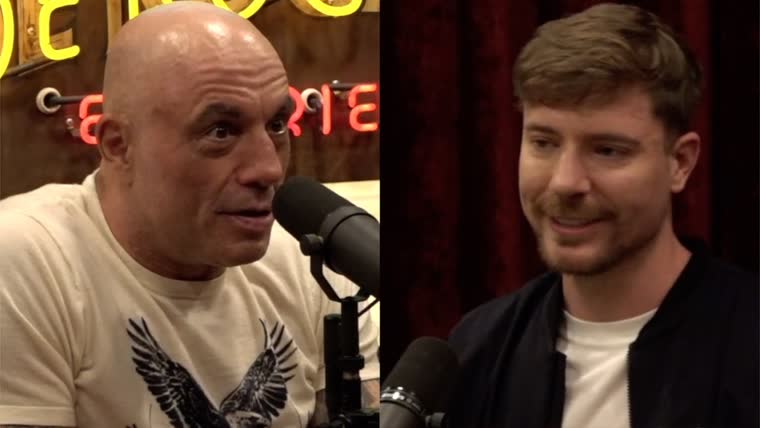
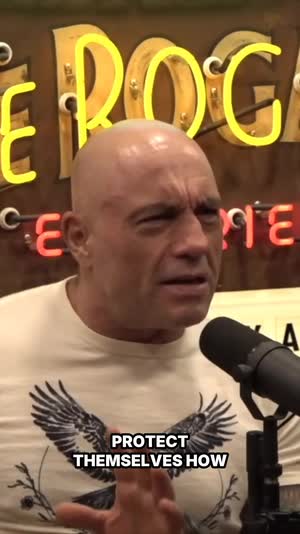
Real ClipSpeedAI output — every clip below was scored, cut, reframed to 9:16 and captioned automatically from the video above it.
From link to shorts in three moves
Copy, paste, wait. There is no fourth step and no file management anywhere in it.
1
Copy the link
Grab the address from the browser bar or the share sheet. A watch link, a share link with a tracking suffix, a timestamped link, a mobile link — all of them resolve to the same video and all of them are accepted. You do not need to trim the URL down to a clean form first.
2
Paste it in and let go
The fetch and the processing both happen on our side. Your connection is not carrying the video, so a weak hotel network or a phone on cellular is no obstacle, and the tab can be closed while it works. Every account accepts sources up to two hours long, and the $1 trial is held to exactly the same ceiling.
3
Collect the shorts
Clips come back vertical, captioned word-by-word, and graded 0-100. Download the ones you want, push them straight to TikTok, Reels or Shorts on a schedule, or leave them in the library. At no point did a video file exist on your machine.
Why the URL route beats download-then-upload
Every item here is a step the conventional workflow makes you do and this one removes.
💾
No file on your disk
A two-hour recording in decent quality is several gigabytes. Doing this weekly on a laptop with a 256GB drive turns into a monthly ritual of deleting things. Server-side fetch means the source never occupies your storage and there is nothing to clean up afterwards.
⬆️
No upload to sit through
Residential upload speeds are a fraction of download speeds, which is why sending a 4GB file to a web tool can take longer than the editing would have. Handing over a link is a few hundred bytes. The slow part of the old workflow simply is not in this one.
🚫
No downloader software
The usual path runs through a command-line tool or, worse, one of the ad-riddled download sites that wrap your video in three redirects and a fake play button. Neither is something to install on a work machine, and on a locked-down corporate laptop neither is even possible.
📱
Works from a phone
Because there is no file handling, the whole flow fits on a screen you can hold. Share a video to the browser, paste, and review the clips on the same phone you will post them from. That matters when the thing you want to clip is happening now and you are not near a desk.
🎯
The AI picks the segments
Pasting a link is only useful if something intelligent happens next. The model reads the whole runtime and selects the segments that hold up on their own, cutting each on sentence boundaries so a short never opens halfway through a word. See how the selection works in the best moments finder.
🖼
Vertical reframing with speaker tracking
Source video from a URL is nearly always 16:9, and a short is 9:16, so two-thirds of the width has to go. Tracking follows whoever is talking instead of pinning the crop to the centre — the reason a two-person interview does not come back framed on the empty space between the chairs.
🔤
Captions burned in, not attached
Word-by-word captions are rendered into the pixels in one of eleven styles. Nothing to upload alongside the clip, nothing to re-sync, and no risk of a platform ignoring your sidecar subtitle file and serving a silent video to a muted feed.
🔴
Live URLs, not just finished videos
Paste the address of a stream that is currently broadcasting on YouTube, Twitch or Kick and clips are produced in real time while it runs. A VOD-only tool cannot even begin until the stream ends and the recording finishes processing.
⚙️
The same thing, programmatically
If you want links processed without a browser, the developer API takes a URL and returns finished clips, and the MCP connector lets Claude do it in conversation. Endpoints and auth are in the API docs.
Who works this way
🏢 People on managed work laptops
IT blocks installers and download sites for good reasons. A URL pasted into a browser is the one path through that does not require raising a ticket.
✈️ Anyone on bad wifi
Conference halls, hotels, trains. Uploading footage over any of those is a lost afternoon; sending a link takes a second and survives the connection dropping.
🎧 Podcast teams republishing to YouTube
The episode is already public, so the copy sitting on a producer's laptop is redundant. Clip from the published link and skip the round trip entirely.
📰 Fast-turnaround news and commentary
When the clip-worthy thing is a press conference or a stream that just aired, minutes matter and a download queue is exactly what you cannot afford.
🎓 Educators with a channel already up
Lecture recordings tend to be published before anyone thinks about promoting them. Working from the public URL means the promotional clips need no new file wrangling.
📈 Social managers handling several accounts
Links can be collected in a doc and worked through in one sitting. Files have to be requested, transferred and stored, which is where most of the delay in agency workflows actually lives.
The download tax nobody prices in
Ask someone how long it takes to make a short from a YouTube video and they will estimate the editing. They will not count the twelve minutes of downloading, the four minutes of finding the file again, the eighteen minutes of uploading it to whatever tool they picked, and the three minutes of deleting it afterwards so the drive does not fill up. Do that four times a week and the overhead outweighs the creative work.
It also has a quiet failure mode. Every extra step is a place to abandon the task. The download that stalls at 80 percent, the upload that fails at the end, the file that turns out to be in a container the tool rejects — none of these are catastrophes, but each one is an excuse to close the tab and do it tomorrow. Removing steps is not about saving seconds. It is about the clips actually getting made.
And there is a quality argument. Passing a video through a random downloader and re-encoding it on the way back out costs you detail that you cannot get back. Fetching from the source once, server-side, keeps the chain shorter.
Which links work, and which do not
Public YouTube video links are the main case and they work in every form you are likely to have: the long watch URL, the short share URL, one with a start time on the end, or the mobile variant. Live YouTube, Twitch and Kick broadcast addresses work too, and route to real-time clipping rather than to VOD processing.
What cannot be fetched is anything the public internet cannot see. Private and unlisted videos, members-only uploads, age-gated content, and anything behind a login or a paywall are not reachable, and no tool that claims otherwise is doing something you want associated with your account. Platforms that encrypt their streams for licensing reasons are also out.
The fallback for all of those is the same and it is not a downgrade: upload the file directly. Everything downstream — detection, scoring, reframing, captioning — is identical whichever way the video arrives. The URL path is a convenience for public content, not the only door in.
Mistakes people make when clipping from a link
Pasting the wrong kind of address is the most common one and it is easy to do on a phone, where a share sheet may hand you a channel page or a playlist rather than the video itself. If the fetch behaves strangely, open the link in a browser first and confirm it plays a single video with no login prompt.
The second is treating the output as finished because it arrived quickly. Speed is exactly what makes it tempting to skip review, and the clip that opens one sentence too early or ends a beat before the punchline is the one that reads as automated. Two minutes of checking is what separates this from the tools whose output everyone can spot.
The third is dumping everything on the same day. A link that produces eleven clips has given you material for two weeks, and posting all eleven on a Tuesday means ten of them compete with each other for the same slice of attention.
The fourth is assuming a public link means a publishable clip. Availability and permission are separate questions, and the platform you post to has its own view about reuploaded material regardless of how you obtained it.
What actually happens after you paste
The video is retrieved and transcribed, then the transcript and audio are analysed together for segments worth isolating. Each candidate is trimmed to a complete thought, stripped of filler words and dead air, cropped to vertical with the active speaker tracked, laid out according to what is on screen, captioned, and scored.
None of that runs on your hardware, which is the other reason this workflow suits phones and cheap laptops. Rendering vertical video with burned-in captions is genuinely demanding work, and doing it locally is why desktop editors heat up and why exports take as long as they do.
Typical turnaround is a few minutes and varies with runtime and how busy the queue is. You are free to close everything. The clips are waiting in the library, and if you have connected accounts you can move straight from reviewing them to scheduling them without another export.
A workflow built around collecting links
Once retrieval stops being a chore, the natural habit changes. Instead of deciding to clip a video and then wrestling with the file, you start keeping a running list of addresses — a note on your phone, a channel in your team chat, a column in a spreadsheet. Anything you watch that has a clippable moment in it goes on the list in three seconds.
Then you process the list in one sitting. Working in a batch is meaningfully faster than one-at-a-time because the review headspace is the same for every clip, and because you can compare across sources and notice that the third link produced better material than the first two. Weekly suits most people; daily suits anyone whose material goes stale.
Keep the list even when you are behind on it. The single most common reason a good source never becomes a clip is that nobody could find the video again a fortnight later, and a URL is the cheapest possible bookmark. Old links keep working, so a backlog is a resource rather than a debt.
For teams, put the list somewhere shared and let whoever has ten minutes work through it. Because the input is a plain address rather than a large file, handing a source to a colleague costs nothing — no transfer, no drive permissions, no waiting for a sync to finish before anyone can start.
When a link job goes wrong, and how to read it
Failures on a URL job come in three shapes and they have almost nothing to do with each other. Nothing comes back at all, which is virtually always retrieval. Fewer clips come back than you expected, which is the source rather than the system. Or clips come back and they are the wrong moments, which is a judgement call you can override in the editor.
Retrieval failures are classified from the error the platform returned before anything is retried, because the right response differs wildly. A named permanent reason — a private upload, a video its owner removed, a terminated account, a copyright block — stops the run on the spot, since no amount of retrying reaches a video that no longer exists. Anything vaguer is treated as our problem rather than the video's and is retried through a different route entirely.
In practice the diagnostic that settles most cases takes ten seconds: open the address in a private browsing window, signed out of everything. If it plays, the link is genuinely public and any failure is on us to retry. If it asks you to sign in, prompts for an age check, or shows a region notice, retrieval cannot succeed no matter how many attempts it makes, and the file upload path is the way in.
A thin result is a different conversation. Clip counts are not padded to hit a round number, so a rambling ninety minutes with four good minutes in it returns roughly four good minutes. If you believe the source was denser than the output suggests, the transcript is worth skimming — long stretches where the speaker never finishes a thought give the sentence-boundary logic nowhere clean to cut.
When the URL route is not the right way in
The obvious case is footage that was never published. Raw camera files, a recorded call sitting in a folder, an internal town hall on a private drive — there is no address to point at, so upload is not the fallback, it is the correct path. The link box exists for content the public web can already reach and nothing else.
The second case is anything requiring frame-exact control. Cutting to a musical beat, building a montage that interleaves several sources, matching a hard broadcast duration — those are editor jobs, and asking an automated pass to hit them is asking for the wrong tool. Use the clips as raw material if you like, but the finishing belongs in a timeline.
The third is material where the value is almost entirely visual. Selection reads the transcript alongside the audio, so a silent b-roll reel or a montage with music over it gives the model very little to reason about, and a clip with no sentence in it has no sentence to end on. Speech-driven sources are where this approach is strongest and it is honest to say so.
Finally, if your source lives behind a platform login — a course portal, a paid community, a webinar replay gated by a form — the link is not fetchable and no setting changes that. Export the file from wherever you have legitimate access and upload it, and everything downstream behaves identically.
What we have learned running this engine
Observations from operating the pipeline in production — not general advice.
A bare "video unavailable" is usually about our IP, not the video
The error text a platform hands back is classified before a single retry fires, and the distinction that matters most is narrower than it looks. Specific permanent phrases — private video, removed by the uploader, account terminated, copyright — end the job immediately. The generic phrase "this video is unavailable" deliberately does not, because YouTube returns exactly that string to flagged datacentre IP ranges for videos that play perfectly in a browser. Treating it as terminal would have failed a large share of ordinary public links, so it is routed to edge-based retrieval instead of aborting the run.
The length check runs on the link before anything is fetched
A URL is a few hundred bytes, which means the plan gate can run before any transfer happens: the duration is read from the public watch page and the two-hour ceiling is enforced on the address itself, before a single byte of the video has moved. An uploaded file cannot work that way, because the naive version only learns the duration after the whole thing has landed on the server — which is how a customer once transferred an hour of video only to be refused at the end of it. The browser now reads duration off the file and asks first. Both paths fail open when the duration is unreadable, because a wrongly refused upload is worse than a late rejection.
A failed link job returns the minutes, and that rule lives in one file
Every project passing into a terminal state runs through a single refund evaluation rather than the three scattered checks we used to have. It fires when the job failed outright, when no clips were inserted at all, and when everything that shipped was a bare fallback cut with no analysis behind it. That last trigger is the one that used to slip: the project got marked complete because output files existed, so the minutes stayed charged even though nothing usable came back. Consolidating the decision into one module is the reason a dead link now costs you nothing rather than costing whatever the source was long.
Compared with the alternatives
vs. a downloader plus a desktop editor
That combination gives you total control and costs you the whole workflow. You handle the file, the storage, the crop, the caption timing and the export queue. It is the right choice when a specific clip has to be exactly right, and the wrong one when you want eleven clips out of a video by lunchtime.
vs. tools that only take file uploads
Functionally similar once the video is in, but they push the retrieval problem back onto you. If your source is already public, requiring a local copy is pure ceremony — and on a phone or a locked-down laptop it is a hard stop rather than an inconvenience.
vs. browser extensions that clip in the page
Extensions are quick for grabbing one segment you are watching right now. They cannot review an entire two-hour runtime for you, they do not rank anything, and they run inside a browser tab, which caps what they can do to the video.
vs. asking an editor for a link turnaround
Sending a link to a freelancer is easy; the cost is the wait and the per-clip price. Most teams end up with both — automation for the volume that has to go out this week, a person for the flagship piece. The trade is turnaround against taste.
vs. other URL-based clippers
The URL box is common now. Two things here are not: broadcast addresses are accepted for streams that are still running, and the same link-in pipeline is reachable from Claude and from your own code. On cut quality, judge for yourself — paste something you know well.
Frequently asked questions
Do I have to download the video before clipping it?
No, and avoiding that is the point of this page. Paste the link and the fetch happens on our servers. No file appears on your computer at any stage, which means no storage used, no downloader installed, and nothing to tidy up when you are done.
Can it fetch a private or unlisted video?
No. Anything that requires being signed in — private uploads, members-only content, age-gated videos, material behind a paywall — cannot be retrieved from a link. For those, export the file and upload it directly; everything after the retrieval step works identically.
Is uploading a file still an option?
Yes, and for footage that was never published anywhere it is the only option. Detection, scoring, captioning and reframing are all the same regardless of whether the video arrived as a link or as a file. The URL box is a shortcut for public content, not a separate product.
Does pasting a URL cost me bandwidth?
Almost none. You are sending a short string of text; the video transfer happens between our infrastructure and the source. That is why the flow works on cellular data and on the kind of conference wifi that would make a 4GB upload impossible.
How long can the video at the URL be?
Up to two hours per source, on the $1 trial and on every plan after it. The ceiling does not change as you move up, so what you judge on day one is what you keep. For something longer, split it into parts or connect the channel and use live clipping instead.
Is there a cheap way to test it on one of my links?
The way in is a 3-day trial for $1, and it takes a source up to two hours long, so you can paste a real link and look at real clips before committing to anything. After that it is $39 a month, and cancelling takes one click. We email before the trial converts.
Do clips from the trial have a watermark?
No, trial clips render clean. No export carries a ClipSpeedAI badge at any point, and if you want branding on them the Brand Kit can apply your own logo instead.
Does the URL need to be trimmed or cleaned up first?
No. Share links arrive with tracking parameters and timestamps attached and both are handled. Paste whatever your browser or share sheet gave you rather than editing it down to a canonical form.
Can I paste a playlist or a channel link?
Processing runs per video, so point it at an individual video address. A playlist URL does not tell the system which item you meant. If you are working through a back catalogue, queue the videos one at a time or drive it through the API.
What happens if the link fails to fetch?
You get told rather than left waiting. The common causes are a video that is not public, a region restriction, or an address that is not a single playable video. Uploading the file resolves all of them, since the restriction is on retrieval and not on processing.
What happens if the link 404s halfway through the job?
It depends which side of the fetch the deletion lands on. Retrieval is the first step and it pulls the entire source onto our infrastructure before any analysis begins, so a video taken down after that point changes nothing: the run finishes from the copy already in hand and the clips arrive as normal. A takedown that lands before or during retrieval ends the job in a terminal failed state with a stated reason instead of leaving it parked on processing forever, and the minutes go back to your balance automatically, because the charge only stands once clips ship. Over the API the same event reads as status failed on your next poll, or arrives on the webhook if you registered one.
Will the quality be worse than working from the original file?
The source is retrieved once at the best available quality and rendered directly from there. That is generally cleaner than the usual chain, where a third-party downloader re-encodes the video before an editor re-encodes it again on export.
How many shorts come back from one link?
It depends entirely on the source, because the output is not padded to a round number. A dense forty-minute interview often produces something in the low teens; a slow, meandering one produces a handful. A thin result usually says more about the recording than the tool.
Can I run the whole thing from a phone?
Yes, start to finish. There is no file to select, so the flow is share, paste, wait, review. Being able to clip from a phone matters most for anything time-sensitive, where the alternative is waiting until you get home.
Can I clip a stream that is live right now?
Yes. Paste the broadcast address while it is running and clips are cut during the stream, so a moment is postable while it is still current. Most link-based tools have to wait for the VOD to finish publishing.
Are the clips captioned automatically?
Every clip, word by word, in one of eleven styles, burned into the video itself. No separate subtitle file to manage and nothing that can desync if you trim the clip afterwards.
Can I choose which parts get clipped?
The AI proposes the segments, and you adjust from there. In and out points, caption style, title and layout are all editable, and you can re-render as many times as you want. Nothing that comes back is final.
What resolution and clip length do the exports come out at?
Vertical renders at 1080x1920, square at 1080x1080 and landscape at 1920x1080, all at a constant thirty frames per second, H.264 video with 48kHz AAC audio and the index written to the front of the file so it starts playing before it has finished downloading. Length is a setting rather than a fixed number: left on automatic, clips land somewhere between fifteen and sixty seconds, while the punchy preference aims at around twenty-two and the story preference at around forty-eight. Worth knowing that fifteen seconds is a hard floor under every one of those settings, because a stub that ends before the thought does reads as broken rather than as short.
Is a free downloader plus some other tool a real alternative?
It is a genuine alternative, and for one clip a month it is a perfectly rational one. The trap is that the two halves know nothing about each other: the downloader hands you a file at whatever quality it decided on, the clipping site re-encodes that file again, and you are the integration layer in between, moving the same video twice by hand. It also parks an unknown intermediary between you and your source, which is an odd thing to build a weekly routine on. Most creators who assemble that stack drop it eventually, not because it fails outright but because the friction quietly stops them clipping at all.
Which aspect ratios come out of a link job?
9:16 for vertical feeds, 1:1 for square placements, and 16:9 if you want a landscape cut of the same moment. Vertical is the default because that is what the phrase "shorts" implies.
Can the shorts be queued to post on their own?
Yes. Connect TikTok, Instagram and YouTube and queue clips onto a calendar. Since one link can produce a week of posts, scheduling is usually a better move than publishing everything the day you made it.
Is there an API that accepts a URL?
One endpoint, one required field. POST to https://api.clipspeed.ai/api/v1/clips/generate with an X-API-Key header and a JSON body containing url, which in one line is: curl -X POST https://api.clipspeed.ai/api/v1/clips/generate -H "X-API-Key: $KEY" -d '{"url":"https://youtu.be/VIDEO_ID"}'. That call answers immediately with a job id such as proj_8f2a1c9e plus a status_url, since the render itself runs for minutes and nothing sane holds a connection open that long. From there you either poll that status_url until the state moves off processing, or send a webhook_url in the same body and catch the signed callback when the clips land. The MCP connector wraps the identical endpoint so Claude can do it inside a conversation, and every parameter is listed in the
developer docs.
How does this compare with clipping the link by hand?
Manual editing wins on judgement and loses badly on throughput. A person who watches a ninety-minute recording end to end will catch the aside that a model grades as ordinary and a room finds hilarious, but that costs ninety minutes before a single cut is made, then the cropping and the caption timing on top. The split that works is to let the link job sweep the whole runtime, then hand-adjust only the two or three clips you genuinely intend to post. Moving the in and out points of a returned clip takes seconds, and the reframe and the captions re-render around the new boundaries rather than needing to be redone.
Does the source video get stored?
It is retrieved to produce your clips and is not republished anywhere by us. Your outputs are yours. The details of retention and handling are in the
privacy policy.
Can I clip a video from a channel that is not mine?
The system will accept any public link. Whether you can publish the result is a copyright and platform-policy question, and that call is yours to make rather than something the tool decides for you.
How long does a link take to come back?
Usually a few minutes, scaling with the length of the source and current queue depth. There is no need to keep the tab open — processing continues without you and the clips are there when you return.
Does it remove ums and long pauses?
Automatically, inside every clip. Filler words and silences are stripped, which on a forty-second short typically recovers a few seconds and is the difference between tight pacing and a viewer swiping away early.
What if the video has two people in it?
Speaker tracking follows whoever is talking, and for conversations a split layout is often chosen so both faces stay on screen. A fixed centre crop on a two-person shot frames the gap between them, which is the giveaway of naive vertical conversion.
Can I put my own branding on clips from a URL?
Yes. The Brand Kit stores your logo, colours and fonts and applies them consistently, so a batch of clips pulled from public links still looks like it came from your channel.
How is this different from your Shorts maker page?
Same engine, different emphasis. This page is about the workflow of never touching a file; the
YouTube Shorts maker goes deeper on the output format and posting side. Pick whichever framing matches the problem you actually have.
You already have the link. That is the whole setup.
Copy a video address, paste it above, and see what comes back. Nothing downloads and nothing installs.
⚡ Paste URL, Get Clips — $1 trial
3-day trial · just $1 · cancel anytime