Your webinar library is top-of-funnel nobody cut up
A recorded webinar sits behind a form and collects a few hundred plays from people who were already going to talk to you. The forty seconds where your customer explains the problem in their own words would travel much further on its own. Paste the recording and get those forty-second pieces back, captioned, cropped correctly around slides and speakers, and ranked so the sales team knows which one to send first.
🎬 Enter any URL under 2 hours
⏱ That video is longer than we can process
Slides stay legible in vertical
Skips the housekeeping at the top
Every clip scored 0-100
Captions that survive a forward
Up to two hours per recording
One long video in, a week of posts out
Paste a link. Get the best moments.
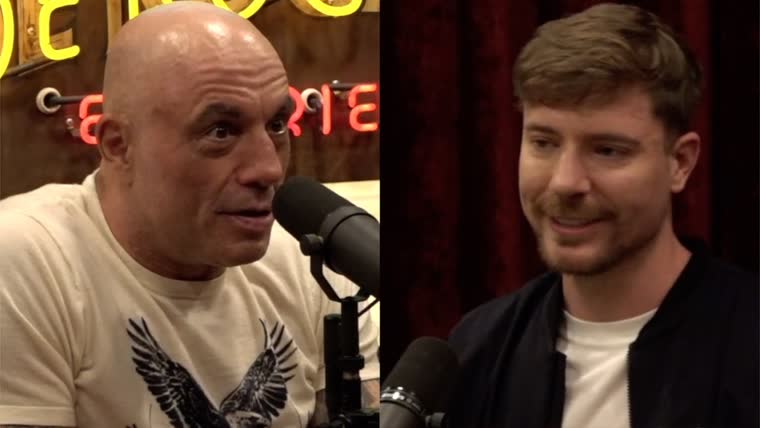
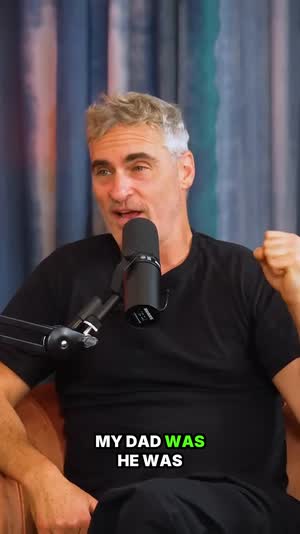
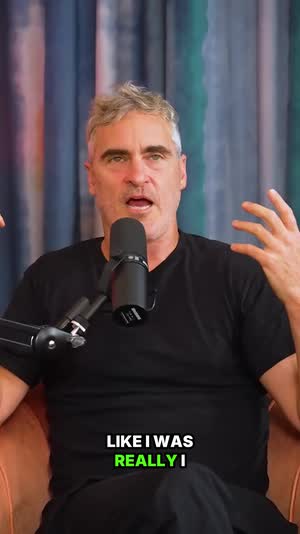
Real ClipSpeedAI output — every clip below was scored, cut, reframed to 9:16 and captioned automatically from the video above it.
Three steps, and the only one that needs a marketer is the last.
1
Upload the recording or paste its link
Export the file from whichever platform hosted the session and upload it, or paste the URL if a copy already lives on YouTube. A single recording can be as long as two hours on any plan, the $1 trial included, which comfortably covers a standard webinar plus an overrunning Q&A. Two minutes is the shortest source accepted, so a very brief excerpt needs a little more around it.
2
The model reads the whole session
It transcribes everything, works out where the substance is, and disregards the opening ritual — the audio checks, the poll about where everyone is dialling in from, the promise to send slides afterwards. What it marks are the passages that make sense to somebody who was never registered: the objection handled well, the number that surprised the room, the two-sentence version of the pitch.
3
Sort by score and route the clips
Clips return vertical or square, captioned, and graded 0-100. Download the strongest for LinkedIn and paid social, hand two to the sales team for outbound, and queue the rest to TikTok, Reels and Shorts on a schedule. One recording that previously produced a single gated asset ends up producing a month of surface area.
Built for how webinars are actually shot
Most clipping tools assume a person talking to a camera. A webinar is usually a slide with a small face in the corner, a shared browser tab, or four people on a grid. The layout logic matters more here than anywhere else.
🖥
Screenshare layout keeps the slide readable
When the content of a clip is on the shared screen, shrinking the whole 16:9 capture into a vertical frame makes text unreadable on a phone. The screenshare layout gives the slide or the demo the space it needs and insets the presenter, so a viewer can still read the chart that made the point.
⏭
The first eight minutes get skipped
Almost every webinar opens with joining instructions, a housekeeping slide and a run through the agenda. None of it is postable and all of it is at the front, which is exactly where a human skimming the recording gives up. Moment selection works from meaning rather than position, so the intro contributes nothing and costs you nothing.
🎯
Presenter tracking across multi-speaker sessions
Webinars hand the microphone around. A host introduces, a specialist demos, a customer answers a question. The crop follows whoever currently holds the floor instead of freezing on the tile that happened to be largest when the clip started.
🔡
Captions that survive being forwarded
A B2B clip does most of its travelling inside other people's software. It gets dropped into a Slack channel, attached to a follow-up email, pasted into a deck for a pipeline review. None of those are video players — there is no caption button to press, no subtitle track to select, and frequently no controls at all. Word-by-word captions in eleven styles are rendered into the pixels rather than shipped alongside them, so the version that reaches a prospect two forwards later reads exactly like the one you exported.
📈
A score that becomes a routing decision
Each clip is graded 0-100 on the strength of its opening, its pacing and where its peak lands. For a marketing team the practical use is triage: the top few go to paid, the middle goes to organic, and the ones about a niche integration go to whichever account executive sells that integration.
✂️
The dead air of a live session removed
Sessions recorded live are full of pauses while a presenter finds the next slide, apologises for the delay, or waits for a poll to close. That gets cut automatically, which usually tightens a forty-five second clip by several seconds and removes the specific sluggishness that marks a piece of content as repurposed from a webinar.
🧩
Sentence-boundary cutting for technical talk
B2B language is full of qualified statements, and half a qualified statement is worse than none. Cuts are placed at sentence boundaries, so a clip never leaves your specialist saying the first clause of a claim and not the condition attached to it.
🎨
Brand Kit so clips do not look borrowed
Company colours, typeface and logo are stored once and applied to every clip. That consistency matters more for a business than for a creator, because a prospect who sees three clips in a fortnight should register them as coming from the same company.
⚙️
An API for marketing operations
If webinars are on a monthly cadence, the clipping can be a step in an automation rather than a task somebody remembers. Jobs can be submitted and results pulled programmatically; see the developer documentation for the endpoints and auth model.
Which B2B teams get the most out of it
🚀 Demand generation
A gated recording converts people already in the funnel. The clips are what reach people who have never heard of you, which is the part of the funnel a webinar programme usually fails to serve.
🤝 Sales enablement
A thirty-second answer to a real objection, from a real customer, outperforms any deck slide in a follow-up email. Clip once and the whole team has ammunition.
🧑💻 Developer relations
Conference talks and community calls are dense with usable explanations. The screenshare layout is what makes a terminal or an IDE readable once the clip goes vertical.
🏷 Product marketing
Recorded demos hold the exact fifteen seconds where the product does the impressive thing. Everything before it is setup and everything after is a question about pricing.
🎓 Training and certification teams
Long enablement sessions contain self-contained answers people re-watch constantly. Clipping them turns a recording nobody scrubs into a searchable library.
📣 Agencies running client webinars
Deliverables multiply without more production days. One recorded session becomes a reporting line item with twenty pieces of content attached to it.
Why webinar libraries go to waste
A company will spend six weeks promoting a webinar, produce sixty minutes of genuinely expert content, and then let the recording sit behind a form where roughly four hundred people will half-watch it. The asset is treated as finished on the day it airs. Meanwhile the same company complains it has nothing to post.
The reason is not laziness. Repurposing a webinar by hand means someone rewatching an hour of themselves, noting timestamps, exporting ranges, reframing each for vertical, captioning each, and getting brand approval on the lot. Realistically that is a day, and it competes with the next campaign. So it is scheduled, deprioritised, and eventually the recording is nine months old and mentions a pricing model you no longer offer.
Cutting that day down to a review of finished candidates changes which decision gets made. The question stops being whether repurposing is worth a day of someone's time and becomes simply which six clips to publish.
What actually clips well out of a webinar
Live Q&A is consistently the strongest source. It is unscripted, it is a real question from a real practitioner, and the answer is compressed because the presenter knows the clock is running. If your webinar has a good Q&A section, expect a disproportionate share of the usable clips to come from it.
Customer voices are the second. Any moment where a guest describes their situation before your product existed is more persuasive than anything a vendor can say about itself, and it is the clip a sales team will use forever.
What clips badly is equally predictable. Anything that requires the previous eleven slides to make sense. Anything where the key detail is a five-point table nobody can read on a phone. Long feature walkthroughs, which are useful to a buyer already in evaluation and meaningless to a stranger. And the closing pitch, which reads as an advertisement in a feed because that is precisely what it is.
The mistakes that flatten a good webinar clip
Leading with the company. A clip that opens on a logo animation and a title card has spent its first two seconds telling a stranger this is an advertisement, and the stranger obliges by scrolling. Open on the sentence. Branding belongs in the corner and in the caption style, not in front of the content.
Clipping the slide instead of the person. Marketers instinctively pick the moment with the best-looking chart, because that is the artefact they are proud of. Feeds reward a human face saying something with conviction, and a chart is at its most useful as the thing behind the person while they explain what it means.
Posting only the parts where the product wins. It is tempting, it is also the reason most B2B video is ignored. The clips that get shared are the ones a practitioner would send a colleague, and nobody sends a colleague a feature demonstration.
Sitting on the recording for a month. Webinar content has a short half-life, especially if it responded to something happening in your market. Clipping the same week is worth more than clipping perfectly, and this is the failure mode a manual process reliably produces.
And finally, publishing without watching. Automation gets the boundaries right the large majority of the time; the exception is a caveated technical claim where half the qualification sits outside the clip. Somebody who understands the subject should watch the ones that go out under a company name.
The two-day routine that keeps a programme cut
A workflow only survives if every step has an owner and a slot in the week. This is the shape that holds up. The session ends Tuesday afternoon; whoever hosted it exports the recording before they log off and submits it the same day. That ordering matters because the export is the one step that needs somebody who was actually in the room, and it is the step that silently stalls for a fortnight when it is left to whoever gets to it first. Clips are back the same evening.
Wednesday morning belongs to one person: the marketer who owns the programme. Not a committee, not a review call. They open the returned set, sort by score, and watch the top eight — a single sitting rather than an afternoon, because the finding and the framing already happened and what is left is a judgement about which moments should carry the company name.
Routing happens in that same sitting, and it splits three ways. Two clips go to the account executive who owns the objection being answered, handed over in whatever tool the sales team already lives in rather than emailed as a link nobody opens. Three are queued to LinkedIn and spaced across the following fortnight, far enough apart that a prospect registers three separate exposures instead of one burst. One goes to paid — and it should be the strongest opener rather than the strongest argument, since a cold audience decides in two seconds and never reaches the reasoning. The remaining two sit in the folder as spares for a week when nothing gets recorded.
The last rule is the one teams skip: some sessions are dropped entirely. A quarterly update that is mostly roadmap slides read aloud, or an onboarding call that is ninety per cent housekeeping, should be abandoned at the Wednesday review rather than mined until something postable turns up. Reaching that verdict has to be cheap, which is what letting the AI video editor do the mechanical work actually buys you — nobody defends a bad recording they did not spend a day cutting.
What actually tells you it is working
The honest measure for clipped webinar content is not view count on any individual post. It is whether the volume of net-new impressions your programme generates rises without the production budget rising, and whether sales conversations start referencing something a prospect saw rather than something they downloaded.
Set a low bar on the first attempt. Take one recording that already happened, generate the clips, publish six of them over two weeks, and see whether anything moves. That experiment costs an afternoon of attention and no production spend, which makes it a much easier thing to get approved than another webinar.
Troubleshooting a session that returned almost nothing
The common complaint about a webinar is not a bad clip, it is a thin set. A sixty-minute session that comes back with four candidates usually has one of three causes, and all of them are diagnosable from the transcript rather than by rewatching the video.
The first is a slide-driven session. If the presenter spent the hour narrating a deck without ever stating the substance aloud, there is very little for selection to grade, because it is grading language. Skim the transcript for numbers and claims; if it reads like stage directions, the recording genuinely had less in it than the slides suggested.
The second is a monologue with no questions. Unscripted answers are self-contained and scripted presentation is not, so a session that ran forty-five minutes of prepared material and skipped Q&A for time will always yield less than one that ran short and took questions. Nothing is broken here, and the fix is to the run-of-show rather than the settings.
The third shows up as clips clustered oddly — everything from the final twenty minutes, or several overlapping cuts of the same exchange. That is what a session with one strong passage looks like. Take the best cut of that passage, discard the near-duplicates, and treat the recording as having produced one good asset instead of forcing six.
Separately, if the crop keeps settling on the wrong person during a panel, the cause is usually the blended audio track rather than the tracking. Review those boundaries by watching, not by reading the transcript, since the transcript is exactly what does not show you the handover.
Cutting it manually compared with letting the pass do it
Say you have a 90-minute session with a specialist, a customer guest and half an hour of live questions. Cut by hand that is an hour of rewatching at speed, a dozen timestamps noted, a dozen ranges exported, a dozen reframes where the slide has to stay legible, a dozen caption passes and one brand check over the lot. Somebody experienced might finish in a day. Most teams find that day never appears in anyone's calendar.
The manual route brings one thing no automatic pass can. A person who knows your buyer knows that the objection answered at minute fifty is the one three deals stalled on last quarter, and that the aside at minute twelve names a competitor you would rather not amplify for free. That judgement is real, it is specific to your company, and it is worth protecting rather than automating.
What manual work loses is never the first clip. It is the fortieth. Attention thins, the caption style drifts between sessions, and the recordings from a busy month quietly go uncut while nobody admits it. Doing the twelfth clip exactly as carefully as the first is a machine property, and that consistency — not speed — is the actual argument for handing over the mechanical half.
For example, take two teams running the same monthly programme. One cuts by hand and gets four clips out of every third recording. The other reviews an automatic shortlist and publishes six from every recording. The second team is not making better individual clips; it is generating more than four times the surface area from identical production spend, and the difference came from removing the step that kept getting postponed.
Export choices for a B2B clip, and the ones that change the outcome
Length is not a number you set before the run. Clips are cut to fit the thought, because a forty-second answer squeezed into fifteen seconds drops the condition attached to the claim, and in B2B the condition is usually the part that mattered legally as well as commercially. Control arrives afterwards: drag either handle a second or two and re-render.
Caption style has the largest effect of any export choice and gets the least discussion. Eleven are available and the choice is not decorative. A dense technical sentence wants a style that keeps fewer words on screen at once; a short customer quote survives a bolder one. Imagine a prospect seeing three of your clips over a fortnight — they should register the second and third as coming from the same company, which is why the sensible move is to settle on one style, store it in the Brand Kit, and stop deciding per clip.
Layout is read from what is on screen rather than from a preference you set once, and there is one case worth overriding by hand: a demo where the interesting thing happens in a small region of a shared screen. The screenshare layout shows the capture faithfully, which means eight pixels that matter stay eight pixels. Either re-record that moment zoomed in, or accept that the clip is really about the presenter explaining it.
Last is the route out, which people treat as an afterthought and should not. Clips download as files, or queue to TikTok, Instagram Reels and YouTube Shorts through the scheduler. LinkedIn — where most B2B webinar clips actually belong — is a manual upload, so download the two or three destined for it during the review sitting rather than planning to come back. Coming back is exactly when they get forgotten.
When a recording is not the right thing to clip
Three kinds of session waste the routine reliably enough to name. The first is one where the substance lives on the slides rather than in the speech. Selection reads what was said, so a passage built around a chart the presenter never describes out loud produces a clip of somebody gesturing at information the viewer never receives.
The second is anything covered by an agreement or naming something unreleased. A clip is easy to share, which is the entire point and also the risk, and a customer who agreed to appear on a gated webinar did not necessarily agree to appear in an advertisement. Ask before cutting, not after posting.
The third is a recording old enough to describe an offer you no longer sell. The edit will be fine and the content will be wrong, and that is a harder mistake to spot in review than a bad boundary is.
What running webinar footage through this has taught us
Observations from operating the pipeline in production — not general advice.
Selection never sees your slides, only what is said aloud
Moment detection works from the transcript, which means anything a presenter offloads to the deck is invisible to it. A passage where somebody says "as you can see here" while the actual figure sits on the slide will score poorly, and it deserves to, because the same forty seconds on a phone is a person pointing at information the viewer never receives. The webinars that clip best are the ones where the speaker states the number aloud before explaining what it means. That is a presenting habit worth coaching into your hosts, not a setting anyone can change afterwards.
A mixed webinar track hides the handover the cutter needs
Most platforms export one blended audio track, so the transcript arrives as a single stream of speech with no speaker labels attached to it. When a host interjects halfway through a specialist answer, the two voices can read as one continuous thought, and the sentence boundary then lands after the interruption instead of before it. In practice this only bites on panels and lively Q&A — which is precisely where the best material tends to be — so those are the clips worth watching end to end before anything goes out under a company name.
A webinar clip ages on its offer, not on its idea
The edit is rarely what makes an old recording unusable. What dates it is a single sentence naming a price, a beta programme, a plan tier or an integration that has since changed, sitting in the middle of an otherwise perfect forty seconds. The reason this catches teams out is that clips get reviewed for quality rather than for currency, so a fortnight of scheduled posts can go out referencing something the company stopped selling two quarters ago. Scan the shortlist for stale claims before you queue it, not after somebody replies asking about the price.
The clip sales reuses is not the clip that performs in a feed
One recording produces two shortlists and the score only ranks for one of them. A feed clip has to survive a stranger scrolling past, so it wants a sharp opening line and a point that lands with no context supplied. An account executive wants the objection stated plainly with the qualification still attached, and will gladly send something that opens slowly, because the recipient already agreed to read the email. Teams that route purely by rank tend to starve the sales side without noticing, which is why the review step should split the list by destination rather than simply taking the top six.
Compared with the usual approaches
vs. asking an agency to repurpose it
An agency will do good work and charge per asset, which caps you at the handful of clips the budget allows and puts a week between the session and the post. That is a reasonable arrangement for a flagship event. It is a poor fit for a monthly webinar programme, where the value is in never letting a recording go uncut.
vs. a junior marketer with the recording open
This is how most companies actually do it, and it is why most companies do it twice. The work is not intellectually hard, it is just long and unrewarding, and it always loses to something with a deadline. Handing over the finding and the framing keeps a person in the loop where their judgement matters — choosing what represents the company — and removes the part that made the task get postponed.
vs. posting the full recording to YouTube
Worth doing, and not a substitute. A sixty-minute upload is found by people searching your exact topic, which is a small and already-interested group. Short clips are pushed to people who never searched anything. Publish both; they reach different audiences and only one of them needs cutting.
vs. general clipping tools
Tools built for podcasts and vlogs assume a face fills the frame. Webinars are slides, screenshares and speaker grids, and a tool that crops them like a talking head produces clips where the entire point of the moment is illegible. The layout selection here is the difference, and it is worth testing on one of your own recordings rather than taking anyone's word for it.
Frequently asked questions
What webinar recordings can I use?
Any standard video file you can export from your webinar platform works, and so does a link if the session was later published to YouTube. The tool cares about the file, not about which software recorded it, so exports from meeting tools, streaming software or a conference AV team are all fine.
Will the slides still be readable in a vertical clip?
That is what the screenshare layout is for. Rather than squeezing the full landscape capture into a narrow frame, it gives the shared screen the room it needs and places the presenter as an inset. Dense slides with small type will still be hard to read on a phone, which is a limitation of the slide rather than the crop.
Does it skip the housekeeping at the beginning?
Yes. Selection is driven by what is being said, not by position in the timeline, so audio checks, agenda run-throughs and the customary two minutes of waiting for latecomers are simply never chosen. The first postable moment usually sits eight to fifteen minutes into a typical session.
How many clips will a one-hour webinar produce?
Commonly somewhere between eight and eighteen, though it depends heavily on format. A structured presentation with a short Q&A yields fewer and better ones. A conversational session with two guests and a long audience Q&A yields many more, because unscripted answers are naturally self-contained.
Can it handle a panel with four speakers?
Yes. The grid layouts exist for exactly this, and speaker tracking follows whoever currently has the floor. Panels do tend to produce clips with more crosstalk, so it is worth reviewing the boundaries on those more carefully than on a single-presenter session.
Is there a cheap way to try it on our content?
Yes. A three-day trial costs one dollar and takes a full two-hour recording, which is enough to run a whole real session through and judge the output on your own material. Pro is thirty-nine a month once the three days are up, and cancelling takes one click.
Do clips have a watermark on them?
No, they come out clean on the trial and on every paid plan alike, which matters more for a company page than for a personal account, since a third-party badge on a corporate post looks unconsidered. The Brand Kit can put your own logo in its place.
How long can the recording be?
Two hours for a single upload, on the $1 trial and on every paid plan alike. That covers nearly every webinar, including ones that overrun. The shortest source accepted is two minutes. Sessions longer than two hours need splitting into parts before upload.
Can I post these to LinkedIn?
You can download any clip and post it to LinkedIn yourself, and the square and vertical formats are both well suited to that feed. The built-in scheduler connects to TikTok, Instagram Reels and YouTube Shorts, so LinkedIn is currently a manual upload rather than an automated one.
Does it write the post copy for me?
Each clip comes back with a suggested title you can rewrite. It does not draft a full LinkedIn post, and honestly you would want to change that copy anyway — the framing that makes a clip land in a B2B feed depends on context about your buyer that the tool does not have.
Can it produce one highlight reel instead of separate clips?
The output is a set of individual clips rather than a single stitched sizzle reel. For social distribution that is usually what you want, because separate moments can be posted across weeks. If you need a montage for an event page, take the top clips and assemble them in whatever editor your team already uses.
Our webinar audio is compressed and a bit rough. Does that matter?
Somewhat. Transcription quality drives both caption accuracy and cut placement, so poor audio degrades both. Typical platform-compressed webinar audio is usually fine. Where it struggles is a speaker on a bad connection with dropouts, or a room mic picking up a conference hall. Run one through the trial before committing.
Can I clip a conference talk recorded by the event AV team?
Yes, and those often clip very well, because a stage talk is rehearsed and its ideas are already compressed. The usual issue is the recording being a static wide shot of the whole stage, where the speaker is small. Face tracking helps, but a wide stage shot will always produce a softer vertical than a proper camera cut.
What about a product demo that is mostly screen recording?
The screenshare layout handles it, and demos clip well when the interesting moment is visual and quick. Where they clip poorly is a five-minute uninterrupted configuration walkthrough, which is valuable to a buyer in evaluation and incomprehensible in a feed. Pick the demos with a visible payoff.
Is our recording confidential once we upload it?
The video is processed to produce your clips and is not published anywhere by us. For sessions containing customer names or unreleased material, review your own internal policy first and read the privacy policy for how data is handled here.
Does it strip out the ums and long pauses?
Yes, automatically, with no setting to switch on. Presenters speaking live under mild pressure produce a great many of them, and taking them out makes a B2B clip sound considerably more assured without anybody re-recording a word of it.
Will a clip ever cut off mid-sentence?
Boundaries are placed at sentence edges specifically to prevent that. Complex conditional statements are where any automated system is most likely to disappoint, so if a clip contains a caveated claim, spend the ten seconds to check both ends before it represents your company anywhere.
Can we apply our brand colours and logo?
Yes. Store them in the Brand Kit once and they carry across every clip. For a company this is less about looking polished and more about recognition, since a prospect needs several exposures before your name attaches to the content.
Can this run automatically after every webinar?
Through the API, yes. Submit the recording when it finishes processing on your platform and collect finished clips programmatically. Marketing operations teams generally wire this into whatever automation already handles post-webinar follow-up. Details are in the developer docs.
Can I use it from Claude?
Yes. There is an MCP connector, so you can hand Claude a recording and get finished clips back inside the conversation, which suits ad-hoc requests better than logging into another dashboard.
What aspect ratios should we use for B2B?
Square 1:1 travels well in professional feeds where the viewer is on a laptop, and vertical 9:16 is right for Reels, Shorts and TikTok. Landscape 16:9 is available if you want a version to embed on a landing page. Exporting more than one ratio for a strong clip is normal.
Does it work for internal town halls and all-hands?
Technically yes, and some teams do use it to cut announcement moments for people who missed the meeting. Consider what is being said before uploading anything internal, since the value of a clip is that it is easy to share and internal content usually should not be.
How fast does it turn a recording around?
Typically a few minutes rather than hours, depending on length and queue. The practical implication is that clipping can happen the same afternoon as the session, while the topic is still live in the audience's mind, instead of in next month's content sprint.
How does this differ from clipping a podcast?
Podcasts are faces and conversation; webinars are slides, demos and structure. The selection logic overlaps but the framing does not. If your programme is closer to a recorded conversation, the interview clip generator describes the two-person case more precisely.
Does it generate AI presenters or synthetic footage?
No. There is no video generation, no avatars and no synthetic voice. Everything in the output came from the recording you supplied, which for corporate content is usually the requirement rather than a limitation.
Can we cancel if it does not fit our workflow?
Yes, in one click, and an email goes out before the trial converts. Access continues to the end of the period you already paid for. Running one real webinar through it is enough to know either way.
What are the realistic alternatives if this is not a fit?
Three worth pricing honestly. A transcript-based editor such as Descript, where deleting text deletes video — strong if somebody was going to sit with the transcript anyway, though the choosing still falls to a human. A freelance editor per recording, which yields the best individual clips and caps you at whatever the budget buys that quarter. Or your event AV team, who can often cut two or three moments while they are already delivering the master, at no extra cost and with none of the tooling questions.
What is the single biggest mistake teams make with webinar clips?
Publishing the pitch. The closing segment is the part the company likes most and the part an audience recognises instantly as an advertisement. The clips that perform are the ones where somebody says something useful with no product attached, and the score tends to agree with that.
Take one recording that already happened
You do not need a new webinar to test this. Pick a session from last quarter, generate the clips, and see whether six of them are worth publishing.