What does an AI reframe tool actually do?
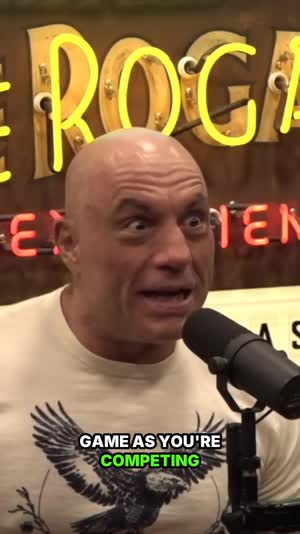
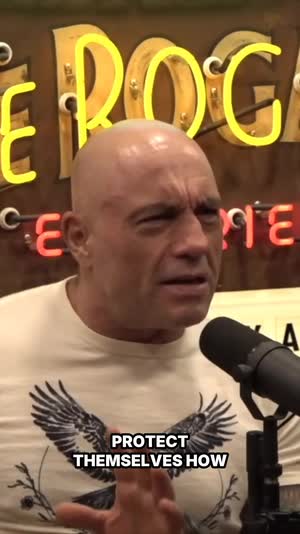
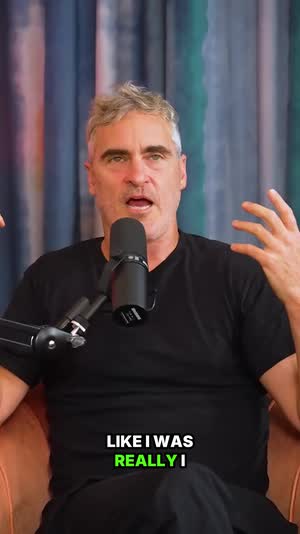
It converts video from one aspect ratio to another while deciding which part of the original frame to keep. Instead of taking a fixed column out of the middle, it identifies the subject — usually the person speaking — and positions the crop window around them, changing the framing as the shot and the speaker change.
Does it track the person who is talking, or just any face?
It follows the active speaker. On footage with several people in shot that distinction matters constantly, because framing whoever happens to be nearest the middle produces a clip where the answer comes from off screen while a listener nods at the camera.
What aspect ratios can I reframe to?
9:16 vertical for Reels, Shorts and TikTok; 1:1 square for feed placements; and 16:9 if you need a landscape version. Each is framed independently, since the right crop for a square frame is not simply a wider version of the vertical one.
What are the seven layouts?
They are named fill, fit, split, three-up, four-up, screenshare and gameplay inset. Fill crops in tight, fit keeps the whole frame at reduced size, split and the grid options stack multiple speakers, screenshare protects shared content from being cropped, and the inset holds a webcam over gameplay.
Can I choose which layout a clip uses?
Yes. The engine picks one from what it sees in the footage, and you can override it and re-render if you disagree. People most often override toward fit, usually because something at the edge of the original frame matters more than the automatic pass assumed.
Why not just crop to the centre?
Because the centre of a landscape frame is frequently not where the subject is. In a two-person interview it is the gap between them. On a stage it is wherever the presenter is not standing at that moment. Centre cropping only survives on single, centred, stationary subjects.
Does the framing jitter or drift while watching?
The crop window is designed to hold still and move deliberately rather than react to every small movement, because constant micro-adjustment is more distracting than a slightly loose frame. If you spot drift on a particular clip, the fit layout removes camera motion from the equation entirely.
What happens when the source cuts between camera angles?
The cut is detected and the framing is re-established on the new shot instead of gliding across it. Sliding smoothly through a hard cut is one of the most obvious tells of automated reframing, so cuts and motion are treated as different events.
Will it work if there are no people in the video?
It will run, but with nothing to track it behaves close to a centred crop, which may or may not be what that footage needs. For product shots, animation or abstract B-roll, consider the fit layout so the composition survives intact.
Can it reframe a whole two-hour video into one long vertical file?
No, and it is better to say so plainly. This produces clip-length exports, not a full-runtime vertical version of your source. You can widen a clip's in and out points, but if your goal is an entire lecture as one vertical file, a conventional editor is the right tool.
Does reframing lose quality?
Cropping into a frame means fewer original pixels covering the same output size, so a 1080p landscape source has less real detail to work with than a 4K one does. It is still perfectly acceptable on a phone. If you have a 4K master, use it — the difference is visible on close-ups.
Can it reframe vertical footage to landscape?
Yes, 16:9 is an available output. Going that direction has the opposite problem: you have height to spare and not enough width, so expect the fit treatment more often, since there is simply no extra picture at the sides to reveal.
Does reframing work on screen recordings?
Screen content uses the screenshare layout, which protects the shared window from being cropped. That said, a dense desktop capture with small text is hard to read on a phone no matter how it is framed, and the realistic answer for that footage is to redesign the visuals rather than convert them.
Does it work on animation or motion graphics?
It runs, but the tracking has no face to follow, so you are effectively choosing between a centred crop and fit. Animation with a clear central character reframes fine; a busy motion-graphics sequence usually does not.
How does this handle a four-person podcast?
Typically with the four-up grid, which puts each participant in their own cell of a two-by-two arrangement. It works best when everyone is already framed head-and-shoulders. Four people across one wide room shot gives every cell too much empty space, and in that case split on the two active speakers reads better.
Are captions positioned around the reframe?
Captions are burned in after the frame is built, so they sit within the vertical picture rather than being cropped by it. There are eleven caption styles, and switching style is the quickest fix if the words land somewhere awkward on a particular clip.
Is reframing available on its own, without the clipping?
Reframing is part of the clip pipeline rather than a standalone converter. Every clip the tool produces goes through it. If you want the framing behaviour applied inside your own workflow, the API is the route.
Is there a cheap way to test the framing?
Yes. Put a real video through the three-day $1 trial and inspect the results — framing is a visual judgement and no description substitutes for looking at your own footage. Trial clips render clean, with no watermark on them.
What does it cost?
A three-day trial is $1, and Pro is $39 per month afterwards. One click cancels it, and we send an email before the trial converts so nothing is charged quietly.
Does it handle ultrawide or unusual source ratios?
Yes, though the wider the source the more aggressive the discard has to be. An ultrawide frame going to 9:16 loses an enormous proportion of its width, so tracking matters more there than on ordinary 16:9 footage, not less.
Can I apply my own branding to reframed clips?
Yes. The Brand Kit holds your logo, colours and fonts and applies them at render, which keeps a batch of clips visually consistent even when they came out of different layouts.
Will it work on footage where someone walks around the stage?
That is a good case for tracking and a terrible one for a fixed crop. The window follows the presenter as they move. If they cross the frame very rapidly, the fit layout is the safer choice, because a fast horizontal traverse can look restless even when tracked accurately.
Does the reframe change the audio?
The framing pass does not touch audio, but the clip pipeline does remove filler words and dead air, which shortens the clip slightly. If you need audio untouched, that trimming is the part to be aware of.
Can I use this through an API?
Yes. The reframe engine sits behind the same API as the rest of the pipeline, and there is an MCP connector for driving it from Claude. Both are documented in
the developer docs.
How does this differ from a vertical video converter?
A converter changes the container and the dimensions. The reframing decision — which part of the picture to keep — is the part that determines whether the result is watchable. Our
vertical video converter page covers the format side of the same job.
Is my footage kept after processing?
Yes, and on this tool that is deliberate rather than incidental. The working copy on the machine that did the cutting is discarded as soon as rendering finishes, but a copy of your uncropped original is kept alongside the project, because overriding a layout and re-rendering needs the full-width picture back — without it, every framing change would mean uploading the file a second time. That stored original, the clips and the transcript all persist until you remove them: deleting a single clip drops its file and row straight away, deleting a project cascades through its clips, transcripts and thumbnails, and deleting the account purges the associated objects from storage within thirty days. None of it is published or shared by us at any stage. The
privacy policy breaks the same thing down category by category.
What if I do not like any of the layouts on a clip?
Export at 16:9 and treat the clip as a normal landscape cut. Not every moment belongs in a vertical frame, and forcing one that does not is worse than posting it wide or skipping it.
When is it still worth cropping the shot by hand?
When one clip genuinely matters more than the rest — a launch video, a paid placement, the opening of a series. A person setting crop positions frame by frame will read intent that no automatic pass can infer, such as holding on a reaction the tracker would have moved away from. The moment you are working through a batch of fifteen, that advantage stops paying for the hours it costs.
What are the alternatives if vertical framing is not working at all?
Three, roughly. Post the moment wide and let it live as a landscape cut. Pad it with blurred bars, which keeps the frame whole and is honest enough for footage that cannot be cropped, though it reads as a repost. Or shoot the next one with the vertical crop already in mind, keeping the subject and any on-screen text inside the middle third of the frame, which removes the problem at the source instead of solving it afterwards.
What source resolution should I send, and what can I export?
Send the highest-resolution master you have. A vertical crop keeps only a tall column of the original, so a 4K source leaves real detail in that column where a re-compressed 1080p download leaves very little, and the gap shows on close-ups rather than on wide shots. Exports are available at 9:16, 1:1 and 16:9, each framed as its own decision rather than derived from the others.